
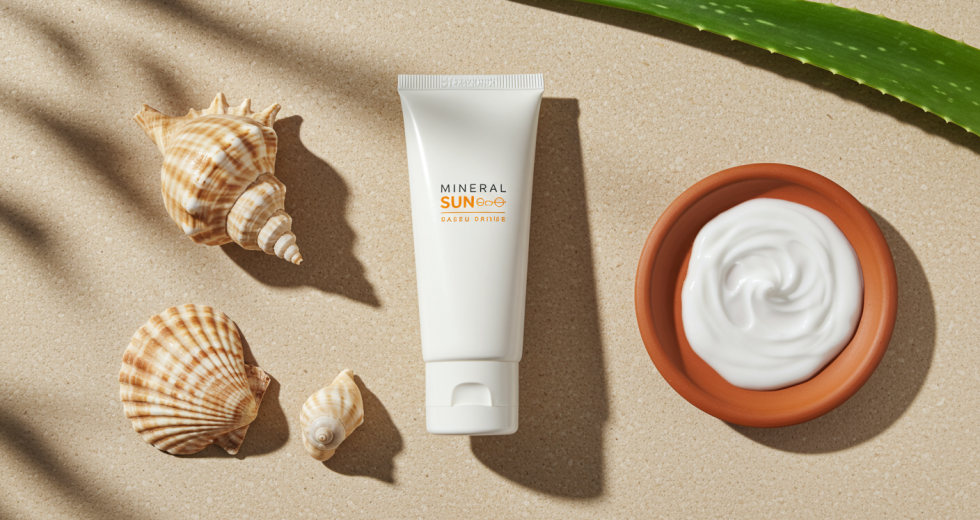
Knowing the sunscreen ingredients to avoid for sensitive skin can prevent years of unnecessary flare-ups, barrier damage, and frustrated trial-and-error. The short list: oxybenzone, octinoxate, fragrance, alcohol denat, and methylisothiazolinone. Each one triggers reactions through a different mechanism, and many people with reactive skin carry all five sensitizers in the same bottle without realizing it. By the end of this guide you will know exactly what to scan on the label and which formulations actually hold up.
Sunscreen Ingredients to Avoid for Sensitive Skin: The 6 Worst
The sunscreen ingredients to avoid for sensitive skin share one trait: they penetrate the skin barrier, trigger immune reactions, or disrupt the acid mantle with repeated use. A 2019 FDA study in JAMA (Matta et al., PMID 30933256) confirmed that oxybenzone and five other chemical UV filters absorb into the bloodstream above FDA safety thresholds after a single day of use.
- Oxybenzone (benzophenone-3) – the most common sensitizer in chemical sunscreens. Causes photocontact dermatitis and has documented endocrine-disrupting activity. Found in roughly 65% of chemical SPF products in the US market.
- Octinoxate (ethylhexyl methoxycinnamate) – penetrates skin rapidly, triggers allergic contact dermatitis in predisposed individuals, and is absorbed into blood within 30 minutes of application.
- Methylisothiazolinone (MI) – a preservative, not a UV filter, but present in many SPF lotions. The European Scientific Committee on Consumer Safety classifies it as not safe for leave-on products. Frequent cause of facial eczema.
- Homosalate – disrupts estrogen, androgen, and progesterone signaling. The FDA requested safety data on homosalate in 2021; that data has not been publicly resolved. Avoid until clearer.
Chemical vs Mineral for Sensitive Skin
The mechanism difference matters. Chemical UV filters work by absorbing UV radiation and converting it to heat inside the skin. That heat release is a direct irritant to already-reactive skin. Mineral filters, zinc oxide and titanium dioxide, sit on top of the stratum corneum and physically scatter UV photons. They do not penetrate. They do not generate heat inside the dermis. The American Academy of Dermatology explicitly recommends zinc oxide and titanium dioxide as the preferred filters for sensitive skin types.
There is one nuance: titanium dioxide covers UVB well but has weaker UVA2 coverage. For full-spectrum protection, zinc oxide at 20% or above covers both UVA1 and UVA2 adequately on its own. Formulations that mix both at lower concentrations often pad with chemical filters to compensate, so always check the full ingredient list, not just the active percentage.
Why Fragrance and Alcohol Denat Cause Reactions
Neither fragrance nor alcohol denat is a UV filter. Both appear in sunscreen formulations for cosmetic reasons: fragrance for scent, alcohol denat for texture and quick-dry feel. Their damage to sensitive skin is cumulative, not always immediate. The Cleveland Clinic identifies fragrance as the single most common contact allergen in skincare, triggering reactions in 1 to 4% of the general population, with significantly higher rates in people with rosacea or eczema.
Alcohol denat strips the lipid layer from the stratum corneum with each application. Over weeks, transepidermal water loss rises and the skin’s tolerance for other actives drops. That is why some people react to a sunscreen after months of apparently fine use: the barrier weakens gradually, fragrance sensitizes through the compromised surface, and the reaction appears to come from nowhere. Women in perimenopause are at highest risk because estrogen-dependent barrier function is already declining.
Mineral Brands That Actually Work
Finding a mineral sunscreen that performs means looking past the mineral label. Formulations with under 10% zinc oxide provide inadequate UVA coverage. The threshold that clinical practice supports is 20-22% non-nano zinc oxide with no fragrance, no alcohol denat, and ideally niacinamide 4% added to address redness. Clients with rosacea who switch from chemical to a 22% zinc oxide plus niacinamide 4% formulation typically see flare frequency drop around 50% within six weeks, without any other protocol change.
What to look for: non-nano zinc oxide listed first among actives, no parfum or fragrance in the inactive list, niacinamide 3-5% for anti-inflammatory support. Tinted formulas with iron oxides block visible light, which triggers melasma and certain rosacea flares that standard SPF misses entirely. That visible-light protection, like red light therapy benefits, works on the skin surface without chemical absorption.
If You Already Reacted: Recovery Protocol
Stop active ingredients for seven days: no retinoids, AHAs, or vitamin C. Apply a cool compress twice daily. Barrier repair: a ceramide moisturizer with niacinamide 4-5% as the only active.
Poor sleep slows barrier repair. Getting best magnesium for sleep dialed in is not a detour from skin recovery; it is part of it. Once the barrier has stabilized, reintroduce a fragrance-free, alcohol-free mineral SPF before any other active. The sunscreen ingredients to avoid for sensitive skin are clearly labeled once you know what you are looking for.