
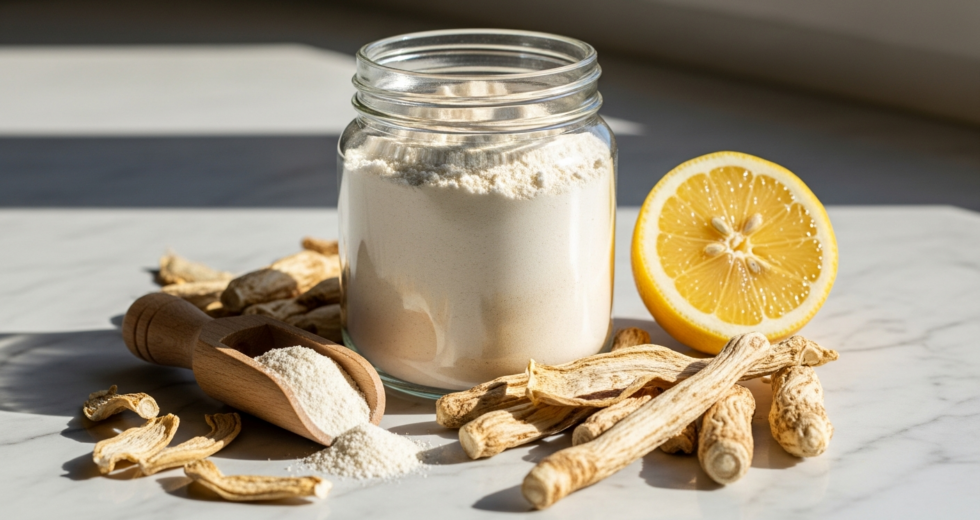
Prebiotic collagen protein is a supplement that combines hydrolyzed collagen peptides with prebiotic fiber, typically inulin or chicory root, in a single product. The idea is that both ingredients work on connected systems: collagen supports skin, joints, and connective tissue, while the prebiotic fiber feeds beneficial gut bacteria. A single scoop, two goals. That is the pitch.
Whether it delivers on both fronts is a fair question. The honest answer is: partially. Collagen peptides have solid clinical backing for skin elasticity and joint support. The prebiotic fiber side is well-supported too, just independently. The combination itself has limited direct research, so the “synergistic” claims some brands make are getting ahead of the science.
Here is a full breakdown of what you are actually buying, what the evidence shows, and where the science stops.
What Goes Into a Prebiotic Collagen Supplement
Most products in this category contain two core ingredients: hydrolyzed collagen peptides (usually type I and III from bovine or marine sources) and a prebiotic fiber source. The most common prebiotic fibers used are inulin, chicory root fiber, and fructooligosaccharides (FOS). Some formulas add acacia fiber or partially hydrolyzed guar gum.
The collagen is hydrolyzed, meaning it has been broken down into smaller peptide chains that dissolve easily and absorb faster than intact native collagen protein. You will see amounts ranging from 5g to 20g of collagen per serving, with most research using a minimum of 10g for skin and joint outcomes.
The prebiotic fiber dose matters just as much as the collagen dose. Clinically meaningful doses in standalone prebiotic research generally start around 3-5g per day. Check the label: some prebiotic collagen products include only a token amount of fiber, closer to 1-2g per serving, which is unlikely to produce meaningful gut effects. A product like Vital Proteins Collagen Peptides is pure collagen without fiber, while dedicated prebiotic collagen blends such as Garden of Life Collagen Peptides with Prebiotics are designed to hit clinically relevant fiber thresholds. Always check the nutrition facts, not just the marketing copy, to confirm you are getting a functional dose of both.
The Collagen Side: What the Research Actually Shows
Collagen peptide research is more mature than most supplement categories. A 2019 systematic review by Bolke et al. published in Nutrients pooled data from randomized controlled trials and found consistent improvements in skin hydration, elasticity, and wrinkle appearance in adults taking daily collagen peptide supplements for 8-24 weeks. A 2023 meta-analysis in the Journal of Science and Food Agriculture examined knee osteoarthritis specifically and found analgesic effects in placebo-controlled trials using 10g daily doses.
Joint-related outcomes, particularly reduced knee pain and improved mobility, also show up consistently in placebo-controlled studies, mostly in adults with age-related joint discomfort rather than diagnosed arthritis.
The mechanism: collagen peptides appear to stimulate fibroblasts (the cells that produce collagen in skin) and chondrocytes (cartilage cells) when they reach those tissues after digestion. A 2024 review in Frontiers in Nutrition confirmed that di- and tri-peptides from hydrolyzed collagen are detectable in serum and reach the dermis and cartilage, where they upregulate collagen synthesis markers. This mechanism is still being characterized in detail, but the clinical signal is consistent enough to take seriously.
If you want to understand how different collagen types function and which sources are best matched to your goal, this guide to types of collagen supplements covers the distinctions clearly.
A full review of the broader collagen evidence is worth reading if you are deciding whether collagen itself is worth adding to your stack first.
The Prebiotic Side: Gut Health and What Fiber Actually Does
Prebiotics are non-digestible fibers that selectively feed beneficial bacteria in your gut, primarily Bifidobacteria and Lactobacillus strains. Unlike probiotics, which add live bacteria, prebiotics give existing good bacteria something to ferment and thrive on. The byproduct of that fermentation, short-chain fatty acids like butyrate, is where most of the measurable health benefit comes from.
A 2025 systematic review in PMC/Nutrients (Zhu et al.) analyzing 34 trials confirmed that prebiotic supplementation consistently increased Bifidobacterium abundance and SCFA production across diverse populations. Butyrate in particular strengthens the intestinal lining, reduces gut inflammation, and regulates the gut-immune interface. Well-documented. Not controversial.
What is less settled is how directly your gut microbiome affects your skin. The gut-skin axis is a real area of active research. A 2025 review in PMC documented credible observational links between gut dysbiosis and skin conditions including acne, eczema, and rosacea. But the leap from “prebiotics feed your gut bacteria” to “your skin will improve” is not linear. The research at the intersection of prebiotic supplementation and measurable skin outcomes is early-stage, mostly small in sample size, and not yet definitive in humans.
The gut-brain connection is better established. If you are curious how gut bacteria influence mood and stress response, the gut health and anxiety research covers the current state of that evidence.
Collagen + Prebiotic Dose Comparison
Before buying, compare what you are actually getting per serving across product tiers. Most prebiotic collagen products underdeliver on fiber even when the collagen dose is solid.
| Ingredient | Token dose (skip it) | Minimum effective dose | Optimal range |
|---|---|---|---|
| Hydrolyzed collagen peptides | Under 5g | 10g | 10-15g daily |
| Prebiotic fiber (inulin/FOS/chicory) | Under 2g | 3g | 3-5g daily |
| Acacia / PHGG (if included) | Under 1g | 2g | 2-4g daily |
Dose data derived from clinical thresholds used in prebiotic supplementation trials (Zhu et al., 2025; PMC12899272) and collagen RCT dose ranges (Bolke et al., 2019; Frontiers in Nutrition, 2024).
Why the Combo Makes Conceptual Sense (Even If the Proof Lags)
There is a reasonable biological rationale for pairing these two ingredients, even before combination-specific trials exist.
Collagen synthesis in your body requires a healthy gut environment. Amino acids from collagen peptides, especially glycine, proline, and hydroxyproline, are absorbed in the small intestine. If your gut lining is compromised or your microbiome is disrupted, absorption efficiency drops. Prebiotics support a healthier gut environment, which in theory improves how well you absorb and utilize the collagen amino acids.
This is plausible physiology, not proven as a direct mechanism at the supplement level. But it is also not a stretch.
The gut-skin axis angle is the more speculative piece. Brands that claim prebiotic collagen will dramatically improve your skin because the fiber feeds bacteria that then repair your skin are running ahead of what controlled trials actually show. The mechanism is biologically plausible. The specific supplement-level evidence in humans is thin. Any brand framing this as proven synergy is overstating the current literature.
How to Use Prebiotic Collagen Protein
Daily consistency matters more than timing. Most collagen RCTs use daily supplementation for at least 8 weeks before measuring outcomes. One-off or sporadic use is unlikely to produce results for either skin or gut.
Mix it into whatever you will actually drink every day: coffee, a smoothie, water. Collagen peptides are heat-stable, so hot drinks are fine. The prebiotic fiber component may cause mild bloating initially as your gut bacteria adjust, especially if you are not used to high-fiber intake. Starting with half a serving for the first week reduces that effect for most people.
If you are taking it primarily for skin elasticity, the trial data supports 10-15g of collagen peptides daily as the range associated with results. Check your label to confirm you are hitting that threshold. For the gut fiber piece, look for at least 3g of prebiotic fiber per serving. Below that, you are getting a symbolic dose that will not meaningfully shift your microbiome.
For a deeper look at optimizing your collagen dose for skin specifically, this guide on how much collagen per day for skin walks through the evidence-based ranges in detail.
Is Prebiotic Collagen Protein Worth the Premium?
Most prebiotic collagen products cost more than a plain collagen peptide powder, sometimes significantly. Whether that premium is justified depends entirely on what you are already taking.
If you currently take a standalone collagen supplement and a separate prebiotic fiber supplement, a combo product might save you money and reduce your daily supplement load. That is a legitimate use case, and if both doses are clinically meaningful, the combo is reasonable.
If you are buying it specifically for the “gut-skin synergy” angle, be realistic: you are betting on a plausible but unproven mechanism. The individual ingredients have solid independent clinical support. The combined effect on your skin via gut improvement is not something clinical trials have clearly demonstrated in this specific supplement format.
The honest take: the collagen in these products works if you hit the right dose. The prebiotic fiber works if you hit the right dose. Whether their combined presence in one supplement produces results beyond either alone is unknown. That does not make it a bad product. It just means the “synergy” branding is ahead of the evidence, and you should buy it on the merits of the individual doses, not the marketing copy.
Who Should Consider It
You are a good fit for prebiotic collagen if you are already interested in collagen for skin or joint support, you also want to improve your daily fiber intake (most adults in the US consume 10-15g per day against a recommended 25-38g), and you prefer fewer separate supplements. That overlap is genuinely practical.
You are less likely to benefit from this specific format if your fiber intake is already consistently high, you have a sensitive gut or diagnosed IBS (the prebiotic fiber, particularly FOS, is a FODMAP and may trigger symptoms), or your sole goal is maximum collagen dose per dollar. In that case, a plain hydrolyzed collagen powder often delivers a higher dose at a lower per-gram cost.
Frequently Asked Questions
Is prebiotic collagen protein the same as collagen with probiotics?
No. Prebiotics are non-digestible fibers that feed your existing gut bacteria. Probiotics are live bacteria strains added directly. Some products combine all three, collagen, prebiotics, and probiotics, but prebiotic collagen specifically refers to the collagen-plus-prebiotic-fiber combination, with no live cultures included.
Can prebiotic collagen actually improve your skin through your gut?
Possibly, but the direct evidence for this specific pathway is still early. The gut-skin axis is real as a biological concept, and gut dysbiosis is associated with certain skin conditions. Whether prebiotic supplementation meaningfully improves skin via that route, separate from the collagen itself, has not been clearly demonstrated in controlled trials as of mid-2026.
How long does it take to see results from prebiotic collagen protein?
For collagen-related outcomes, most research measures results at 8 to 12 weeks of daily use. A 2019 review by Bolke et al. found significant skin improvements at 8 weeks in multiple trials. Gut changes from prebiotics can appear faster, sometimes within 2 to 4 weeks, as the microbiome adjusts to increased fiber intake.
What is a good daily dose of prebiotic collagen protein?
Look for at least 10g of hydrolyzed collagen peptides and at least 3g of prebiotic fiber per serving. Many products hit the collagen threshold but include only 1-2g of fiber, which is unlikely to produce meaningful gut effects. Read the nutrition facts panel, not just the front-of-package claims.
Is prebiotic collagen safe to take daily?
Generally yes for healthy adults. Hydrolyzed collagen peptides have a strong safety record across clinical trials. Prebiotic fiber at moderate doses is well-tolerated for most people, though those with irritable bowel syndrome may find high-FOS products trigger symptoms. If you have a diagnosed gut condition, check with your doctor before adding a high-fiber supplement.
Does the prebiotic fiber interfere with collagen absorption?
No evidence suggests it does. They operate in different parts of your digestive tract via different mechanisms. The prebiotic fiber is fermented in the colon; collagen peptides are absorbed earlier in the small intestine. They are not competing for the same digestive pathways, and no current research flags an interaction between them.
Ready to compare specific products? Check our guide to the best collagen supplements by goal so you can match the right formula to your actual use case.