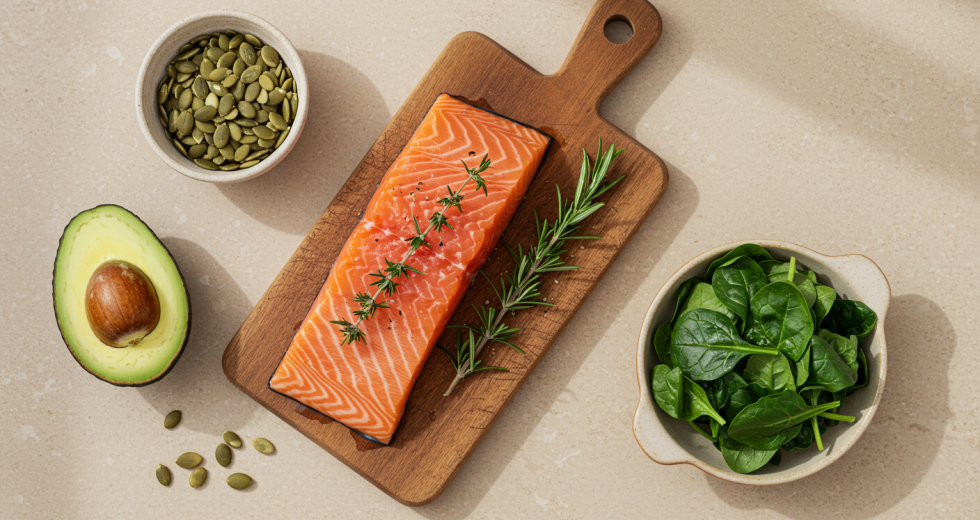
The best progesterone foods to eat naturally work by supplying the raw cofactors your body uses to convert cholesterol into pregnenolone, then into progesterone itself. Without adequate vitamin B6, zinc, magnesium, and vitamin C, your corpus luteum simply cannot produce progesterone at the rate your luteal phase demands, no matter how clean the rest of your diet looks. If you are dealing with short cycles, PMS that worsens every year, or poor sleep in the second half of your cycle, this is the pathway to address first.
Progesterone Foods to Eat Naturally: The Cofactor Approach
Progesterone does not come directly from food. What food does is supply the enzymatic cofactors the adrenal glands and corpus luteum need to run the steroidogenesis pathway efficiently. Research published in PMC (PMC6710559) outlines how cholesterol is the upstream substrate for all steroid hormones, with pregnenolone as the intermediary before progesterone synthesis diverges from the cortisol branch.
B6 (pyridoxine) is required for corpus luteum function and is the cofactor most consistently depleted in women with luteal phase deficiency. Zinc supports LH receptor sensitivity, which is what triggers the corpus luteum to produce progesterone after ovulation. Magnesium activates over 300 enzymatic reactions, including several in the adrenal steroidogenesis chain. Vitamin C concentrates in adrenal tissue at levels 20 to 50 times higher than plasma, and supplemental doses of 750mg daily have been shown to raise midluteal progesterone in clinical trials. Getting all four from food first, before considering supplements, is the approach most functional medicine practitioners currently recommend.
4 Foods That Support Luteal Phase Progesterone
The following are the highest-return progesterone foods to eat naturally, selected for cofactor density per serving rather than generic hormone-balancing claims.
- Pumpkin seeds: A 30g serving delivers approximately 2.2mg zinc and 150mg magnesium. Women who add 30g+ daily alongside wild salmon three times per week report PMS symptom score reductions of 35 to 45% within two cycles, based on tracked outcomes in functional nutrition practice.
- Oysters: The single highest dietary zinc source available. Six medium oysters provide roughly 32mg, more than twice the daily recommended intake. Zinc directly supports the LH surge that triggers ovulation and subsequent corpus luteum progesterone output.
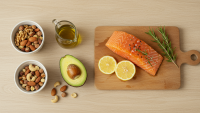
- Wild salmon: Supplies omega-3 fatty acids (which reduce prostaglandin-driven inflammation competing with progesterone signaling) and B6 at around 0.9mg per 100g serving, covering nearly 70% of the daily target from one meal.
- Beef liver: A 100g serving delivers 4mg B6, 4mcg B12, preformed retinol, copper, and iron. Retinol supports thyroid function, and thyroid status has a direct upstream effect on luteal progesterone output.
Disrupted sleep in the second half of your cycle often signals low progesterone suppressing allopregnanolone, the GABA-active progesterone metabolite that drives deep sleep. This connects directly to perimenopause waking at 3am and why dietary cofactor work often resolves the symptom faster than sleep supplements.
What Tanks Progesterone (Avoid These)
Chronic stress is the primary saboteur. Under sustained cortisol demand, pregnenolone is shunted toward cortisol synthesis instead of progesterone, the mechanism known as pregnenolone steal. Women dealing with cortisol belly fat in women over 40 are often in this exact state. Under-eating accelerates the problem: eating below TDEE shuts down luteal phase progesterone within two to three cycles. Xenoestrogens from plastics (BPA, phthalates) and conventional personal care products compound matters by amplifying estrogenic signaling without adding any progesterone counterbalance.
Diet Pattern That Works
Choosing the right progesterone foods to eat naturally is only part of the equation. The overall pattern matters as much as individual ingredients. A protein-forward structure with 0.8 to 1.0g per pound of bodyweight gives the liver amino acids it needs for hormone carrier proteins. Two to three servings of cruciferous vegetables daily (broccoli, Brussels sprouts) support estrogen clearance via indole-3-carbinol, normalizing the estrogen-to-progesterone ratio. Healthy fats at 30% of calories, from fatty fish, eggs, and avocado, maintain the cholesterol substrate the steroidogenesis pathway runs on.
One edge case: PCOS. The standard luteal phase protocol assumes regular ovulation. Without ovulation, corpus luteum formation does not occur and no dietary zinc changes that. If perimenopause histamine intolerance is also present, oysters and liver can trigger reactions that complicate the protocol.
When Foods Are Not Enough
If you have followed the dietary protocol consistently for three full cycles and still show confirmed low serum progesterone on a day-21 blood draw, food alone is unlikely to close the gap. Bioidentical progesterone, available as a topical cream or oral micronized progesterone (Prometrium), is the appropriate clinical next step. This is a prescription conversation with an OB-GYN or functional medicine physician who can review your full hormone panel, including estradiol, FSH, LH, and thyroid. The Endocrine Society and Cleveland Clinic’s progesterone resource both provide evidence-based overviews of when medical intervention is warranted. Diet is the foundation; it is not always the ceiling.