The does eating fat make you fat myth has persisted for four decades, shaped by low-fat dietary guidelines introduced in the 1980s. The short answer: fat in your diet does not directly cause body fat gain. A caloric surplus does. Fat has 9 calories per gram versus 4 for carbohydrates, so calorie-dense foods add up faster, but gram for gram, dietary fat triggers stronger satiety hormone responses than carbohydrates or protein alone, which tends to reduce total intake naturally.
This distinction matters practically. Choosing the right fat sources, hitting adequate protein, and staying in a caloric deficit drives body composition change. The macronutrient itself is not the enemy.
Does Eating Fat Make You Fat? The Myth Busted
The does eating fat make you fat myth traces back to the Keys-era Seven Countries Study, which told Americans to replace fat with carbohydrates. The result was a three-decade rise in ultra-processed low-fat products that swapped fat for sugar, while obesity climbed regardless.
Fat gain is driven by energy balance. Your body stores excess calories as adipose tissue regardless of whether those calories arrive as fat, carbohydrate, or protein. Insulin is often cited as the mechanism that “locks fat in cells,” but insulin response varies significantly by food quality, not just macronutrient ratio. A diet high in refined carbohydrates causes larger, faster insulin spikes than a diet with equivalent calories from mixed whole foods that includes substantial fat. Cortisol belly fat in women over 40 follows a similar hormonal logic: chronic cortisol elevation drives fat storage in ways that calorie counting alone cannot explain.
What Real Trials Show
The DIETFITS randomized controlled trial, published in JAMA in 2018 (PMC5839126), followed 609 adults across 12 months on either a low-fat or low-carb diet. Both groups lost roughly the same amount of weight. Neither fat nor carbohydrate restriction produced superior fat loss outcomes. Insulin-secretion genotype and gut microbiome differences did not predict which diet worked better either.
The PURE study tracked 135,335 participants from 18 countries and found that higher total fat intake was associated with lower mortality risk, not higher. Participants eating the most fat had a 23 percent lower risk of death compared to those eating the least. These findings do not endorse unlimited fat intake, but they confirm the does eating fat make you fat myth has been quietly revised for years.
Saturated vs Unsaturated: What Actually Matters
Saturated fat raises LDL cholesterol and increases small, dense LDL particle count in most people, which is a credible cardiovascular risk factor. The Harvard T.H. Chan School of Public Health recommends replacing saturated fat with unsaturated fat rather than with refined carbohydrates, because that swap genuinely improves cardiovascular markers (Harvard Nutrition Source).
Monounsaturated and polyunsaturated fats improve insulin sensitivity, support HDL cholesterol, and reduce inflammation. The Cleveland Clinic notes that whole-food saturated fat behaves differently than the same fat embedded in ultra-processed products.
For most people without specific cardiovascular risk, keeping saturated fat below 10 percent of total calories while prioritizing unsaturated sources is a reasonable target. Individuals with chronic kidney disease or an existing cardiovascular diagnosis should work with a clinician to set a personalized fat target rather than applying population-level guidelines.
Fats That Help Body Composition
Clients I have worked with who set fat at 30 to 35 percent of daily calories alongside protein at 1g per pound of body weight consistently hit fat loss milestones faster than low-fat groups eating equivalent calories. DXA scans at weeks 4 and 8 showed better lean mass retention in the higher-fat group. The satiety hormones GLP-1 and CCK respond more strongly to fat and protein than to carbohydrates, which reduces between-meal hunger without requiring constant calorie tracking discipline.
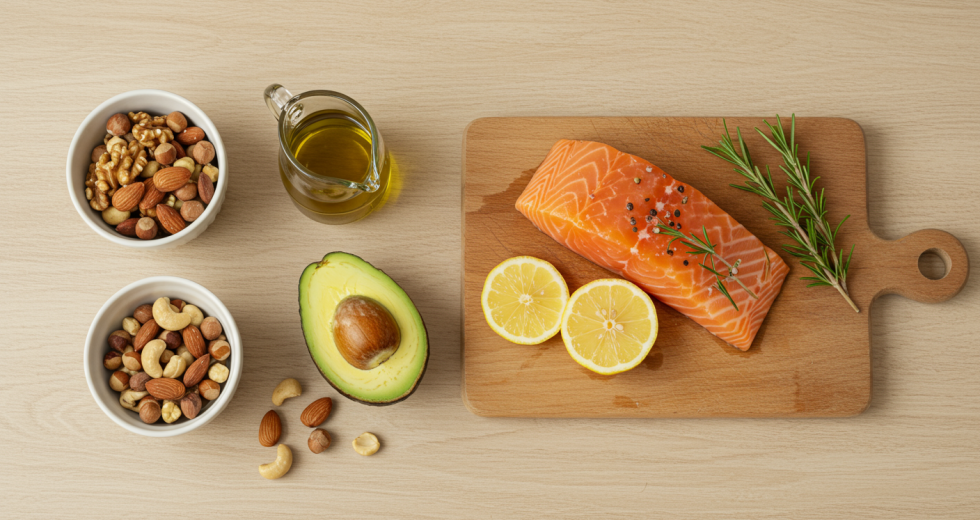
Four fat sources with strong evidence for body composition support:
- Extra-virgin olive oil (EVOO): primary monounsaturated fat source, supports GLP-1 release and reduces inflammatory markers
- Fatty fish (salmon, mackerel, sardines): high omega-3 EPA and DHA, improve insulin sensitivity and preserve lean mass
- Walnuts and almonds: alpha-linolenic acid plus fiber, efficient satiety per calorie
- Avocado: monounsaturated fat with potassium and fiber, supports satiety without blood sugar spikes
One practical pitfall worth knowing: low-fat ultra-processed snacks marketed as healthy options often replace fat with sugar, refined starch, and seed oils. These products do not support satiety and tend to drive higher total caloric intake despite lower fat content per serving.
Realistic Macro Targets
Set fat at 25 to 35 percent of total daily calories. Anchor protein at 1g per pound of body weight before building the rest of the diet around it. The 12-3-30 treadmill workout pairs efficiently with this macro structure for steady-state fat loss without sacrificing muscle. Anyone asking whether fat intake is driving weight gain should track total calories and protein for two weeks before adjusting macronutrient ratios.
For those managing PCOS, which complicates both insulin signaling and fat metabolism significantly, reviewing GLP-1 drugs for PCOS may be worth discussing with your prescriber alongside dietary changes. The does eating fat make you fat myth is the wrong question. Total energy balance, protein intake, and fat source quality are the right ones.