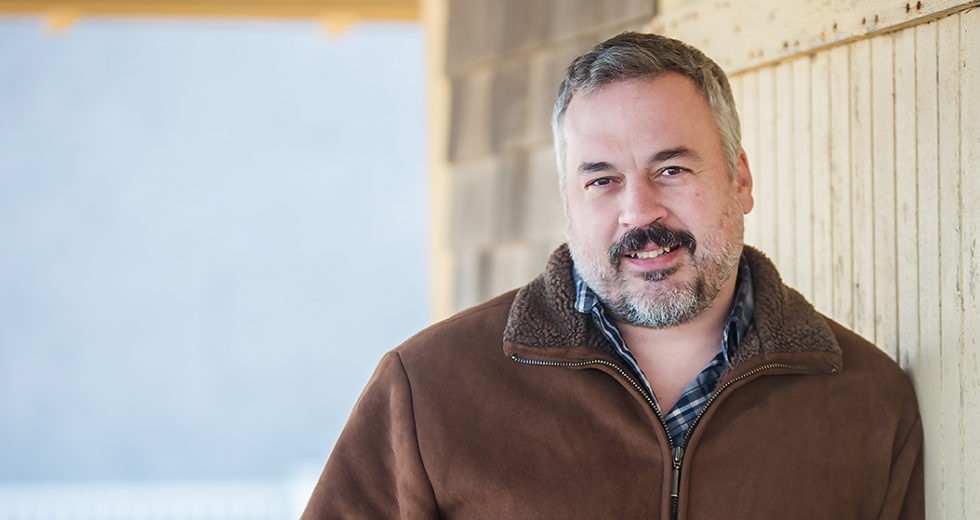
A former member of the film industry, Marty Thornley re-wrote an old screenplay into his debut novel after recognizing that the themes he originally wrote about paralleled what he experienced while grieving the death of his brother. Pain, addiction, mental illness all reveal themselves in Painless through a gory clinical trial gone horribly wrong. I connected with Marty and he shared how writing Painless the novel was the creative outlet much needed as a bystander of drug-overdose.
- The cover art is very attention-grabbing! Can you tell us more about it and how it serves as a metaphor for the book?
I designed the cover myself using some stock art, which is most of the hand and arm image, practically untouched. I simply Googled “bloody scalpel,” and somewhere down in the results this image stood out. I used Photoshop to extend the arm and add in some pill images. I searched for images of fake Oxy, laced with fentanyl. It turned out there was/is a specific pill. It is greenish with the letters CDN on one side and the number 80 on the other. The image I used looked a little similar, and when blended into the arm and the red of the blood, it almost looks like cells or blood vessels or a bruise.
- Can you describe the meaning behind the title? Is “painless” symbolic of anything more than a doctor’s attempt at curing chronic pain?
In the end, it is really a terrible, dark joke about the deeper meanings in the book. While lots of people suffer from chronic pain and wish there was an easy way out, that is not realistic. Stress and depression can cause pain. Taking a pill or having surgery does not cure the mental health issues that may be the true source of the pain. For an addict, a temporary high might numb the pain or make you forget about it for a while, but if you don’t address the underlying problems, they will only get worse. In the case of the mad doctor, he had a childhood trauma that continued to haunt him through his life.
- Painless was originally written as a screenplay. What inspired you to transform it into your debut novel?
I had not written anything since finishing Painless as a screenplay, when I was trying to get the film produced back in 2008 or so. In 2015, my brother Keith passed away from an overdose of fentanyl. It was the first time I had ever heard the name of that drug. As I approached the first-year memorial of his death, I was dealing with the grief and reassessing a lot of things in my life. I realized I had not written anything in close to a decade. I had no interest in revisiting the process of writing a screenplay. I was not in the right mental place to come up with a new story either, but I had a few screenplays that I thought were solid stories. I read through them with the plan to find one I could turn into a novel. I read through Painless for the first time in years and realized I had included several lines about pills and how the pharmaceutical industry might not like this cure for pain. The biggest challenge in adapting the novel version (and most exciting aspect of it all) would be adding all the character backstory that never gets seen on-screen. I decided to use some aspects of my brother to flesh out the main character Greg. It started as a way for me to add some good memories of my brother, but the themes of addiction and mental health came to the forefront more than I ever intended or thought would happen.
- Why did you decide to include the sensitive themes of addiction, mental health, and self-destruction in a gory psychological horror book?
This is one of the great joys of writing. Sometimes you don’t know where the process is going to take you. Beyond some casual references to pills and a vague plan to include some memories of my brother, I did not set out to write “about” addiction or mental health. But as the characters developed and the end of the story neared, it became clear that is what the story had always been about.
- How was writing Painlessas a novel different from the initial draft as a screenplay?
The story is practically identical. I added a few new things, mostly enhancing the action, but it is very close to the original plot. The most significant difference is that you get to see what everyone is thinking. If you imagine the story as a film, you would see all the characters doing these crazy things but would have no idea what they are thinking. I thought that could be a creepy film. In the book, you don’t have the visuals, but you get to hear everything they are thinking. I honestly do not know which creeps me out more, the idea of watching them do something and not knowing why, or reading their thoughts and feeling like I understand why they are doing it. You always hear this advice about writing good villains. You have to make them believable. You have to understand their logic because in their heads they are doing the right thing. In this case, most of the characters were not villains, but they were doing crazy things. Some people might get grossed out by the gory activity going on and the descriptions of blood as someone cuts into their own arm. But I’d like to think readers occasionally pause and think, “Wait. I understand WHY they are doing that. It makes sense.”
- Did you include any part of your experience with your brother’s overdose into the plot of Painless?
I don’t think there is anything specific about the overdose that influenced the story. I did try to imagine what his life might have been like in those last years and whether a surgery that relieved physical pain would have cured someone with an addiction.
- How has this idea of “pain” played a role in your life? Did revisiting Painlesschange your perspective at all on pain or addiction?
Beyond some minor injuries, a couple of broken bones, I had never had significant pain issues. Ironically, after spending so much time sitting and writing, I finished the book and then spent most of the next year with a bad back. I also had a funny experience with a toothache recently, where I was in terrible pain for a couple of days. I went through the exact process I had put my characters through—feeling the pain wash away as the Novocain sank in, the relief and clarity of thought for the first time in days, then catching up on sleep that night and devouring food as soon as I could eat again.
- What do you hope that Painlesstells readers who have experienced pain, addiction, or self-destruction either personally or as a family member?
I guess mostly that there is no quick fix. The doctor thought he could fix everyone with a simple surgery. All the patients went to the trial hoping it would solve their problems, end their chronic pain, end their addictions. I may not have the solution for any of that, but hoping that someone will come along with a magic cure to all your problems is not the answer and will just drag things out and make things worse. Also, if you get invited to a clinical trial at an old building in the middle of nowhere with a crazy doctor, don’t do it.
Thank you, Marty, for sharing your perspective and talking about pain with our readers. Painless is now available to purchase, and you can keep up with Marty’s work at https://martythornley.com/.