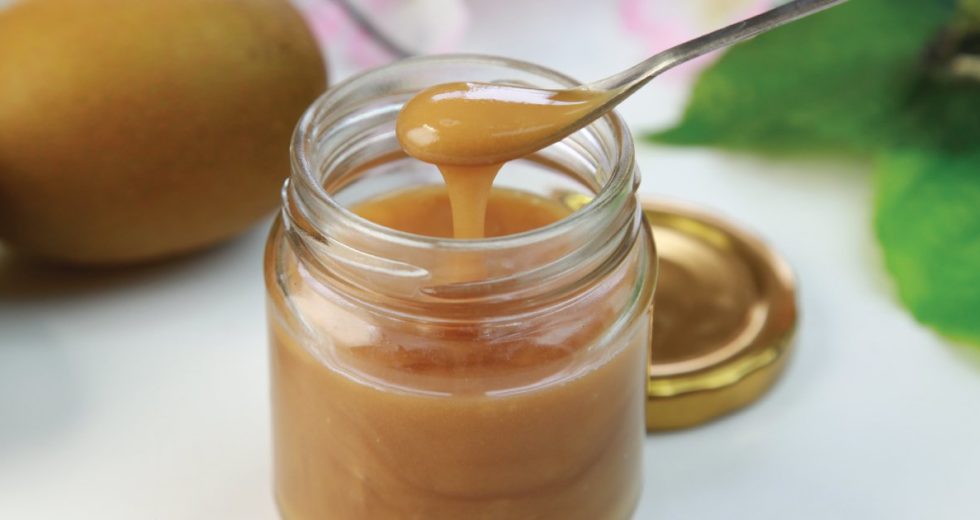
The therapeutic use of honey is well documented throughout history. Known then as “food of the gods”, honey has been used since ancient times to treat multiple conditions. However, the abuse of antibiotics and the resistance of some bacteria to them has led scientists to study alternative treatments such as honey. Manuka honey, which comes exclusively from New Zealand, includes powerful antimicrobial properties that have been discovered in the 80s by Professor Peter Molan from the New Zealand University.
The plant, the Manuka bush (Leptospermum scoparium), is also called the tea tree plant and belongs to the family of the myrtle family, hence the honey is called “myrtle nectar of the South Sea”.
After the arrival of the Europeans in New Zealand, the Manuka bushes were used to feed cattle. However, they soon observed that the animals fed with these shrubs were much healthier and more resilient.
Years later, the New Zealand University’s professor Peter Molan thoroughly studies the properties of Manuka honey.
Ingredients of Manuka honey
Honey has an antibiotic and healing effect on any type of wound and this is because the glucose oxidase it contains slowly releases hydrogen peroxide.
Recent studies conducted in New Zealand revealed that the antimicrobial action of the Manuka honey was maintained even when the hydrogen peroxide was extracted.
Manuka honey also contains significant amounts of methylglyoxal (MGO), a substance that briefly emerges in the presence of sugar to maintain healthy cells. MGO is a substance that has a great antibacterial effect and is found naturally in many foods but not in the amounts found in Manuka honey.
Other important components of in this type of honey are leptosperin, vitamins (C, B1, B2), minerals, trace elements, and acetylcholine.
Manuka honey is powerful against superbugs
The properties of Manuka honey are multiple and have proven effective against bacteria such as streptococci and staphylococci, as well as against Helicobacter pylori or E. coli.
In addition, it has been effective in lab tests against superbugs (antibiotic-resistant bacteria).
On the other hand, the Manuka honey is a good alternative to conventional remedies for injuries, skin diseases, and even tooth decay, as well as for open wounds, burns, and even for skin diseases such as eczema, psoriasis or fungal skin infections.