
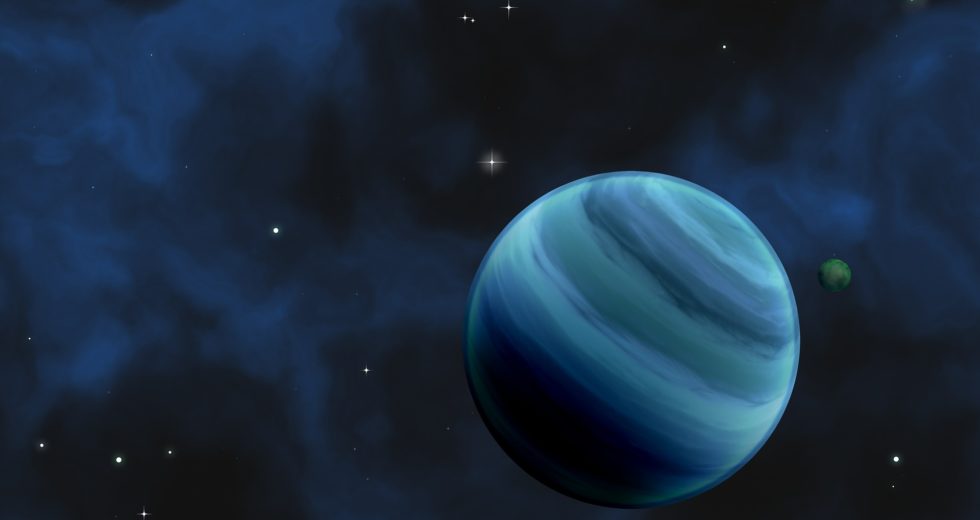
Life on other planets is a subject that has puzzled scientists for many decades. It is very possible that there is life beyond Terra, but the evidence just didn’t make its appearance yet.
However, on August 26, 2021, a team of astronomers revealed said that they’d found a new type of exoplanet that is a significant step towards finding alien life.
The planets are known as Hycean worlds. Their name comes from the merger of the terms hydrogen and ocean.
There might be planet-wide oceans and hydrogen-rich atmospheres covering these worlds.
Still, researchers think that these planets could be habitable.
Researchers from the University of Cambridge are the brains behind the captivating study.
The research was peer-reviewed and published in the Astrophysical Journal on August 26.
The researchers believe that the Hycean worlds could be a booster in the quest of finding life outside of Earth.
The worlds are somewhat reminiscent of our planet, as they are mostly (or completely) covered by oceans.
However, they are also quite spectacular in size, some nearly 2.6 times the diameter of our planet, with temperatures reaching nearly 200 degrees C, combined with a thick hydrogen atmosphere.
The climate conditions and geography place the worlds between Earth and giant planets like Uranus or Neptune.
The researchers believe that planets in that size range are, however, some of the most common in the Milky Way.
The paper mentioned that they might be various types of Hyceans out there, including “dark” and “cold”:
Our investigations include tidally locked “Dark Hycean” worlds that permit habitable conditions only on their permanent nightsides and “Cold Hycean” worlds that see negligible irradiation [receive little radiation from their stars].
The planets have large quantities of water, meaning that they are a good place for life to thrive.
However, Hycean planets, unlike most mini-Neptunes, could have solid surfaces, similar to Earth’s.
However, most Hycean candidates are bigger and hotter than Earth but still could contain huge oceans, according to the researchers.
Though these conditions sound unlivable, they are similar to those present in the more extreme aquatic habitats of our planet, which means that, at least in theory, they could support life, at least at a microbial scale.