
The new year comes with cosmic treats, as NASA itself says it. 2020 was pretty rich in astronomical events, and we can remind of the Halloween’s Blue Moon, the conjunction between Jupiter and Saturn, the Perseid meteor shower, or the total solar eclipse from South America.
But it’s time to focus our attention on 2021, as one of the most amazing things it brings is the perihelion. Considering that in Ancient Greek where the word comes from, it means ‘near the Sun’, you can easily guess what is referring to.
On January 2, Earth is closer to the Sun than it will ever be in 2021
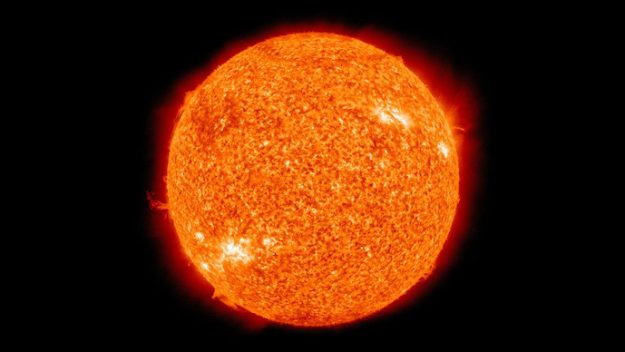
Obviously, the Sun was a little larger on the sky on January 2 (with an increased volume of 3%), although it wasn’t noticeable with the naked eye. However, looking to our star without any protection for the eyes is highly unrecommended. The new year also brings other cosmic wonders, as the following post reveals:
✨ This new year comes with cosmic treats! In January, our planet will be at its closest point in orbit around the Sun, known as perihelion. We’ll also get a chance to see Uranus near the Moon and Mars and spot a fast-moving Mercury. 🔭
Skywatching tips: https://t.co/HTlEpZ1khX pic.twitter.com/bx3WduD7ue
— NASA JPL (@NASAJPL) December 31, 2020
Earth is usually at about 150 million kilometres (93 million miles) away from the Sun, or about eight light-minutes. This means that the light from our star needs eight minutes to arrive on Earth. If the Sun would magically get teleported to another universe, we will still see it on the sky for 8 minutes.
Astronomers even established a unit of length for cosmic distances by using the space that separates our planet from the Sun. Therefore, one AU (Astronomical Unit) is equal to about 150 million kilometres.
The orbit of Earth is not a perfect circle. Our planet can also be farther from the Sun than it usually is. The maximum distance that Earth can be separated from the Sun is called aphelion.