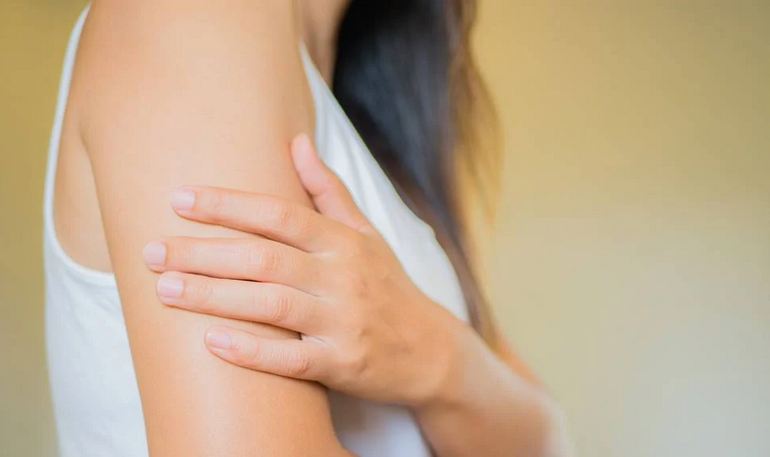
Keratosis Pilaris (KP) is a troubling skin condition that affects approximately 40 % of people worldwide. KP is just a blockage of the hair follicles, and it usually manifests as hard, small bumps enclosed by red areas of skin on the legs, face, or arms.
KP can really make you feel worthless and influence your lifestyle a lot, but you can learn how to control it and treat it.
Here are the best KP summer treatments and skin care routines backed by experts.
Moisturize Properly

Moisturizing is essential for controlling KP. Seasonal changes can influence KP a lot, and you might notice that your skin is drier in the winter and autumn, making KP more noticeable. And that’s the last thing you want.
In the summer, moisturizing is also important, even if KP behaves well at higher humidity levels and sunlight.
Besides applying sunscreen with an SPF of at least 30, experts also recommend moisturizing.
“Look for ingredients like ceramides, shea butter, petrolatum, dimethicone, glycerin, and hyaluronic acid,” says Blair Murphy-Rose, MD, FAAD.
Using niacinamide and aloe is also great because they can reduce discolouration in reddish bumps thanks to their anti-inflammatory properties.
Remember to talk with a specialist first to find out which are the best skincare products and formulas you can use to treat KP.
Exfoliate Regularly

First, using a rough loofah to exfoliate the bumps off is a huge mistake. It might work for a short period or as a quick routine, but you risk severe skin and hair inflammation that can make KP even more noticeable.
So, exfoliation is essential, but be careful what products and accessories you use. For example, some physical exfoliators can be too abrasive on KP.
Specialists recommend looking after finely-milled body scrubs that can be effective. Also, you have to scrub gently and always moisturize after. Try patting your skin dry with a towel right after bathing and apply a rich-formula moisturizer while your skin is still wet.
Finally, some of the best products for chemical exfoliation are:
- serums with glycolic acid, lactic acid (AHAs), salicylic acid (BHA), gluconolactone (PHA);
- topical lotions;
- creams;
- urea.
Discussing with a dermatologist is essential to treat KP accurately.
📖 Related Reading
Understanding What Causes Keratosis Pilaris
Keratosis pilaris occurs when keratin, a protective protein found in skin, hair, and nails, accumulates in hair follicles and forms hard plugs. These plugs create the characteristic rough, bumpy texture that most commonly appears on the upper arms, thighs, buttocks, and sometimes the face. The condition affects approximately 50 to 80 percent of adolescents and 40 percent of adults, according to the Journal of the American Academy of Dermatology.
Genetics play the primary role in determining who develops KP. If one parent has the condition, the likelihood of a child developing it is significant. KP is also more prevalent in individuals with atopic dermatitis (eczema), asthma, or other atopic conditions, suggesting a shared underlying mechanism related to skin barrier function and immune response.
Evidence-Based Treatment Options for KP
Dermatologists typically recommend a two-phase approach: chemical exfoliation to dissolve keratin plugs followed by intensive moisturizing to smooth and protect the skin surface.
Alpha-hydroxy acids (AHAs) such as glycolic acid and lactic acid are first-line chemical exfoliants for KP. Products containing 10 to 15 percent glycolic acid have shown consistent improvement in clinical studies. Lactic acid at similar concentrations offers the added benefit of humectant properties, drawing moisture into the skin while exfoliating. Apply AHA products to affected areas after showering on damp skin for optimal absorption.
Urea-based creams at 20 to 40 percent concentration are another well-studied option. Urea acts as both a keratolytic agent, breaking down excess keratin, and a powerful moisturizer. A study in Clinical and Experimental Dermatology found that 40 percent urea cream applied twice daily produced significant improvement in KP roughness and redness within four weeks.
Retinoids, including over-the-counter retinol and prescription tretinoin, promote cell turnover and can prevent keratin buildup. However, they increase sun sensitivity and can cause initial irritation, so gradual introduction is essential. Start with application every third night and increase frequency as your skin tolerates it.
Lifestyle Adjustments That Help
Beyond topical treatments, several daily habits can minimize KP flare-ups. Avoid hot showers, which strip natural oils and worsen dryness. Limit shower time to 10 minutes with lukewarm water. Apply moisturizer within three minutes of toweling off to lock in hydration. Avoid physical scrubbing with loofahs or pumice stones, which can cause micro-tears and inflammation that worsens the bumpy texture rather than improving it.
Humidifier use during dry winter months can significantly reduce KP severity by maintaining skin hydration. Some individuals also report improvement after increasing dietary omega-3 fatty acid intake through fish, flaxseed, or supplementation, though controlled clinical trials on this approach are limited.
Frequently Asked Questions
Does keratosis pilaris ever go away permanently?
KP often improves significantly with age. Many people who had severe KP in adolescence find it largely resolves by their 30s. However, the underlying genetic predisposition remains, meaning the condition may fluctuate seasonally or during hormonal changes. Consistent skincare maintenance can keep symptoms minimal long-term.
Can diet affect keratosis pilaris?
Some dermatologists and patients report improvement with dietary changes, particularly increasing omega-3 fatty acids and reducing dairy or gluten. However, there are no large-scale clinical trials confirming a direct dietary cause or cure for KP. If you suspect a food trigger, an elimination diet conducted under medical supervision can help identify potential connections.
Is it safe to pop or squeeze keratosis pilaris bumps?
No. Squeezing or picking at KP bumps can cause scarring, hyperpigmentation, and secondary infection. Unlike acne, the plugs in KP are composed of keratin rather than sebum and bacteria, so extraction does not resolve the underlying issue. Chemical exfoliation is a safer and more effective approach to clearing the bumps.
What is the best moisturizer for keratosis pilaris?
Look for moisturizers containing ceramides, urea (at least 10 percent), or lactic acid. CeraVe SA Cream, AmLactin Daily Moisturizing Lotion, and Eucerin Roughness Relief are widely recommended by dermatologists for KP management. Apply generously to affected areas twice daily, particularly after bathing, for best results.