
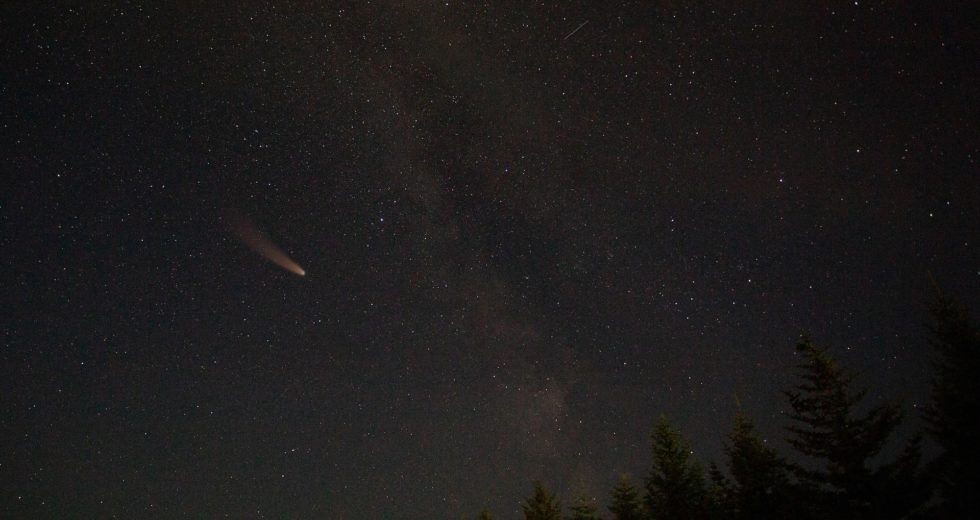
A kilonova is a type of astronomical event that is caused by the collision of two neutron stars, or a neutron star and a black hole. When these incredibly dense and massive objects collide, they release a tremendous amount of energy in the form of light and gravitational waves.
The resulting explosion, known as a kilonova, is incredibly bright, releasing up to 10^52 ergs of energy in the form of ultraviolet, visible, and near-infrared light. This light is produced as the debris from the collision heats up and expands, emitting light across the electromagnetic spectrum. The detection of kilonovae has been important in helping astronomers better understand the properties of dense matter and the behavior of gravity in extreme conditions.
A cosmic premiere?
Astronomers have made a groundbreaking discovery of a binary system that will eventually lead to the formation of a kilonova, a rare and explosive outcome of a neutron star collision. The secret to its fate lies in a duo of missed supernovae, which are so uncommon that it is estimated that only ten such systems exist in the entire Milky Way galaxy.
André-Nicolas Chené, an astronomer from the NOIRLab, explained:
For quite some time, astronomers speculated about the exact conditions that could eventually lead to a kilonova,
These new results demonstrate that, in at least some cases, two sibling neutron stars can merge when one of them was created without a classical supernova explosion.
The most powerful type of explosion in the universe is a gamma-ray burst (GRB). GRBs are extremely luminous and release a tremendous amount of energy in the form of gamma rays over a very short time period, typically lasting only a few seconds to a minute. They are thought to be caused by the collapse of massive stars or the merging of binary neutron stars, and can emit as much energy in a few seconds as the sun will emit over its entire 10-billion-year lifetime.
The new study was published in Nature.