
Vagus Nerve Exercises That Reduce Anxiety Fast
The vagus nerve responds to specific stimulation patterns within 60 seconds, producing measurable shifts in heart rate variability that signal your brain to exit the threat response. When you learn to trigger this pathway deliberately, you gain a reliable off-switch for acute anxiety that works through your own biology, no medication required. This guide gives you seven evidence-informed techniques, the exact protocols for each, a realistic timeline for what to expect, and the situations where you should get more support than any breathwork routine can provide.
Quick reference
- The vagus nerve is the primary highway between your brain and your gut, heart, and lungs. Its tone determines how fast you recover from stress.
- Higher vagal tone correlates with lower resting anxiety, better emotional regulation, and faster heart rate recovery after stress exposure.
- Slow exhalation breathing, cold face immersion, and humming all produce acute vagal activation you can feel within one to three minutes.
- Daily practice for two to eight weeks produces lasting improvements in heart rate variability (HRV), the most practical measurable proxy for vagal tone.
- If anxiety is severe, persistent, or accompanied by physical symptoms such as palpitations or dizziness, these exercises complement but do not replace professional evaluation.
- The Valsalva maneuver is contraindicated in people with atrial fibrillation, uncontrolled hypertension, or glaucoma.
How the Vagus Nerve Calms Anxiety
The vagus nerve is the longest cranial nerve in the body, running from the brainstem through the neck, chest, and abdomen. It carries signals in both directions: roughly 80 percent of its fibers transmit information upward from your organs to your brain, and the remaining 20 percent carry commands downward. That ratio matters. Your nervous system is primarily listening to your body, not dictating to it, which is why deliberately changing your breathing, posture, or temperature changes how your brain interprets threat.
Stephen Porges, the neurobiologist who developed Polyvagal Theory, described three distinct states the nervous system cycles through depending on perceived safety. The ventral vagal state is the calm, socially engaged baseline where you feel present and connected. The dorsal vagal state is a freeze or shutdown response, associated with dissociation and numbness. Sympathetic activation sits between them, producing the classic fight-or-flight response most people recognize as anxiety. Porges himself summarized the clinical implication in his foundational paper in the Annals of the New York Academy of Sciences: “The autonomic nervous system, which previously was described as a primarily motor system, is now understood to be a system that continuously evaluates risk in the environment.” The goal of vagus nerve exercises follows directly from that framing: you are training the evaluation system, not suppressing the response.
Heart rate variability is the most practical way to measure this shift at home. HRV refers to the variation in time between successive heartbeats. Counter-intuitively, more variation is better: a healthy nervous system continuously fine-tunes cardiac rhythm in response to breathing and environmental input. Low HRV is associated with chronic stress, anxiety disorders, and cardiovascular risk. A meta-analysis by Laborde and colleagues published in Frontiers in Psychology found that slow-paced breathing at around six breaths per minute reliably increased HRV within a single five-minute session. That increase is a direct signal that the vagal brake has engaged. Consumer devices like the Garmin HRV Status feature, the Polar H10 chest strap, or the free Elite HRV app give you a readable number within minutes of waking, making your daily progress consistently trackable without specialized clinical equipment.
7 Vagus Nerve Exercises That Actually Work
1. Slow Exhale Breathing (4-8 Pattern)
Inhale through the nose for four counts, exhale through the mouth or nose for eight counts. The extended exhale is the active ingredient. Exhalation activates the parasympathetic branch of the autonomic nervous system through a phenomenon called respiratory sinus arrhythmia: your heart slows slightly on every out-breath because vagal tone temporarily increases. Making the exhale twice as long as the inhale maximizes this effect.
Protocol: Six rounds, roughly five minutes. Sit or lie with your spine supported. Soften the belly on the inhale rather than expanding the chest. Count silently. After about 47 seconds most people notice a warm heaviness settling across the chest and shoulders. The 4-7-8 pattern (inhale 4, hold 7, exhale 8) works similarly, though the breath hold feels uncomfortable for beginners. Start with 4-8 and progress to 4-7-8 after two weeks of daily practice.
What it stimulates anatomically: Diaphragmatic movement directly presses against vagal nerve branches running through the thorax. Baroreceptors in the aortic arch sense the pressure changes and relay signals upward through the nucleus tractus solitarius in the brainstem.
Evidence level: High. The Laborde meta-analysis across 42 studies confirmed acute HRV increase with slow breathing. The Cleveland Clinic lists diaphragmatic breathing as a primary tool for managing anxiety and improving autonomic balance.
2. Cold Face Immersion
Fill a bowl with cold water at 10 to 15 degrees Celsius (add ice to tap water until it reaches roughly that range). Submerge your face up to the temples for 15 to 30 seconds. This triggers the diving reflex, a phylogenetically ancient mammalian response that immediately drops heart rate and redistributes blood flow to core organs. The trigeminal nerve fibers around the eyes and forehead connect directly to vagal circuits in the brainstem.
Protocol: Three submersions with 30-second breathing recovery between each. For people who find full immersion too abrupt, pressing a freezer-cold gel pack such as the Therapearl Sports Pack against the eyes and cheekbones for 30 seconds produces a partial effect. The first attempt will likely feel unpleasant. By the third session, most people report that the initial shock has reduced and the post-immersion calm is the dominant sensation.
What it stimulates anatomically: The ophthalmic and maxillary branches of the trigeminal nerve feed into the dorsal motor nucleus of the vagus in the brainstem. The diving reflex also activates the sinoatrial node via vagal efferent signals, dropping heart rate measurably.
Evidence level: Moderate-high. The diving reflex is well-documented in physiology literature. A 2018 review in Frontiers in Neuroscience confirmed cold water facial immersion produces a clinically meaningful bradycardia response in healthy adults.
3. Humming and Singing
Hum any tone for a full exhale, breathe in, then hum again. Do this for three to five minutes. The vibration directly activates the laryngeal and pharyngeal branches of the vagus nerve, which supply the vocal cords and upper throat. You can feel a resonance in your chest if you hum at a low pitch, around E2 or F2 for most adults.
Protocol: Close-mouth humming at a comfortable low pitch, 15 to 20 repetitions. For stronger effect, hold one hand lightly against the sternum and try to direct the vibration into your palm. Singing in a car alone works equally well, and group singing in choirs has been studied specifically for HRV effects. A 2017 study from the University of Gothenburg found that choir singers’ heart rates synchronized during performance, suggesting shared vagal activation through resonant breathing and vocalization.
What it stimulates anatomically: The superior laryngeal nerve and the recurrent laryngeal nerve are both vagal branches. Vibration from humming also travels through the skull base toward the auricular branch of the vagus (Arnold’s nerve), which surfaces near the ear canal.
Evidence level: Moderate. Most evidence is mechanistic and observational. The direct connection between vocalization and vagal tone is well-supported anatomically and humming is frequently used in Polyvagal Theory-based clinical protocols.
4. Gargling
Take a mouthful of water and gargle vigorously for 30 to 60 seconds. The physical effort activates the posterior pharyngeal muscles, which the vagus innervates. This is one of the most underrated techniques because it requires nothing except a glass of water and can be done anywhere.
Protocol: Three to four rounds, morning and before bed. For maximum activation, gargle hard enough that your eyes water slightly. This engages the same reflex that gets triggered during the clinical gag test doctors use to check vagal function. Stanley Rosenberg, somatic therapist and author of Accessing the Healing Power of the Vagus Nerve, includes gargling as one of the core exercises in his autonomic regulation protocol.
What it stimulates anatomically: The glossopharyngeal nerve (CN IX) and vagus (CN X) jointly supply the pharynx. Strong gargling produces sustained activation of both, with measurable effects on the palate reflex.
Evidence level: Low-moderate. Direct clinical trials are sparse. Mechanistic rationale is strong. Widely used in trauma-informed somatic therapies without reported adverse effects.
5. Auricular Vagal Massage
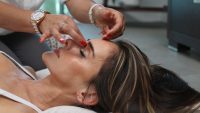
The auricular branch of the vagus nerve, also called Arnold’s nerve, surfaces in the outer ear, specifically in the cymba conchae (the small hollow just above the ear canal opening). Gentle, sustained pressure here produces measurable cardiovascular and autonomic changes.
Protocol: Use your thumb and index finger. Pinch the outer edge of the cymba conchae and apply steady gentle pressure for 30 to 60 seconds per side. Then move to the tragus (the small flap covering the ear canal entrance) and press gently inward while breathing slowly. Repeat three times per side. This is the anatomical basis behind transcutaneous auricular vagus nerve stimulation (taVNS) devices like the Parasym, which deliver small electrical pulses to this exact location.
What it stimulates anatomically: Arnold’s nerve, the only peripheral branch of the vagus that reaches the skin surface, runs directly through this tissue. Pressure and vibration here send afferent signals to the nucleus tractus solitarius.
Evidence level: Moderate-high for the anatomy; moderate for manual stimulation. A 2013 study published in Brain Stimulation confirmed taVNS at the cymba conchae produced measurable autonomic effects, supporting the mechanistic basis for manual pressure at the same location.
6. Half-Salamander Eye Exercise (Stanley Rosenberg)
This exercise targets the connection between the suboccipital muscles, the upper cervical spine, and the ventral vagal complex. Stanley Rosenberg developed it as part of his clinical protocol described in his 2017 book. Chronic tension in the suboccipital region impairs vagal function, and rebalancing eye-neck coordination can release it.
Protocol: Lie on your back with both hands interlaced behind your head, palms cradling the occiput. Without moving your head, slowly move your eyes to the right and hold for 30 to 60 seconds, or until you feel a spontaneous swallow, sigh, or yawn. These involuntary responses are signs of vagal activation. Return gaze to center and repeat to the left. Two repetitions per side.
What it stimulates anatomically: Eye movement recruits the superior oblique muscle, supplied by the trochlear nerve (CN IV), whose nucleus sits adjacent to vagal motor nuclei in the brainstem. The lateral eye movement also creates gentle traction on the occipital soft tissue, releasing tension in the suboccipital triangle where the vagus exits the skull.
Evidence level: Low-moderate. No randomized controlled trials specific to this technique. Used clinically in Rosenberg’s protocol and reported by practitioners in Somatic Experiencing and Polyvagal Theory-based therapy. The anatomical rationale is plausible and the technique carries no known risk.
7. Diaphragmatic Breathing Plus Valsalva
The Valsalva maneuver is a brief, forceful exhalation against a closed glottis, the same action you make when bearing down or straining. After the strain releases, vagal tone surges in compensation, dropping heart rate sharply. This is the basis of the clinical vagal maneuver used in emergency medicine to interrupt supraventricular tachycardia.
Protocol: Take a deep diaphragmatic breath. At peak inhalation, close your mouth and pinch your nose, then push air out as if trying to exhale while maintaining the pressure for 10 seconds. Release fully and breathe normally for two to three cycles. Repeat twice. You will feel a distinct cardiac deceleration after each release: most people describe it as a sudden wave of calm or a dropping sensation behind the sternum. Do not use this technique if you have known cardiac arrhythmia, uncontrolled hypertension, or glaucoma, and consult your physician before using it regularly if you have any cardiovascular history. The cortisol response to chronic stress is partly modulated by this same baroreflex pathway.
What it stimulates anatomically: The Valsalva maneuver increases intrathoracic pressure, activating baroreceptors in the aortic arch and carotid sinus. When pressure releases, the baroreflex produces a strong vagally-mediated bradycardia.
Evidence level: High for the physiology. The Valsalva maneuver has been studied extensively in cardiovascular medicine. Its deliberate use as an anxiety regulation tool follows directly from the mechanism.
How Long Until You Feel Different
The timelines here are drawn from studies conducted primarily in the United States, United Kingdom, and Western Europe, which is the population where most HRV and vagal stimulation research has been conducted. There are two distinct timescales here. The first three sessions of any vagal exercise often feel like nothing happened. That is normal. The acute effect is real and measurable on an HRV device, but it is subtle in the first week before your nervous system calibrates to the stimulus.
Acute effect (single session): Measurable HRV improvement within two to five minutes of slow breathing. Heart rate drop of 8 to 15 beats per minute during cold face immersion. Subjective calm noticeable within one to three minutes of humming. The first time most people feel something unmistakable is during cold immersion, because the cardiac response is too abrupt to miss.
Sustained effect (daily practice): A review by Laborde and colleagues in Applied Psychophysiology and Biofeedback, covering 58 studies on HRV biofeedback, concluded that consistent practice across two to eight weeks produced reliable autonomic improvements in both clinical and non-clinical populations. Practically, most people report a noticeable reduction in baseline anxiety after 14 days of daily practice. After four weeks, sleep quality often improves as a secondary effect. After eight weeks, the shift in reactivity becomes obvious: situations that used to trigger a 30-minute anxiety spiral now settle within five to ten minutes.
You are not changing your personality. You are raising the threshold at which your nervous system decides something is a threat, and improving how quickly it recovers when it does react. This connects directly to why magnesium and parasympathetic recovery are frequently discussed together: magnesium deficiency impairs the same GABA and glutamate pathways that vagal tone regulation depends on.
When Vagus Nerve Exercises Are Not Enough
There is a cottage industry of content treating vagal stimulation as a universal cure for anxiety, trauma, and nervous system dysregulation. That framing does harm. These exercises are adjunctive tools with real physiological value, and they have clear limits.
The Valsalva contraindication is serious. If you have atrial fibrillation, structural heart disease, poorly controlled hypertension, or a history of retinal detachment or glaucoma, the Valsalva maneuver is contraindicated. Check with your cardiologist before using it.
Severe anxiety disorders, panic disorder with frequent attacks, PTSD with active hyperarousal, and OCD do not respond adequately to breathwork alone. A meta-analysis published in Psychological Medicine in 2020 found that cognitive behavioral therapy (CBT) produced substantially larger effect sizes for generalized anxiety disorder than relaxation techniques alone. Vagal exercises can reduce acute physiological arousal and make CBT sessions more productive, but they are not a substitute for structured psychological intervention.
If your anxiety is accompanied by heart palpitations, dizziness, chest tightness, or symptoms that worsen despite regular practice, you may be dealing with dysautonomia or POTS (Postural Orthostatic Tachycardia Syndrome), conditions where autonomic regulation of blood pressure and heart rate is structurally impaired. These require clinical diagnosis. The patterns of anxiety in real reader stories often reveal this cluster of symptoms being dismissed for years before a proper diagnosis.
The honest position: vagus nerve exercises work, are safe for most people, and have meaningful evidence behind the better-studied techniques. They are not pseudoscience. They are also not a complete anxiety treatment protocol on their own.
Combining Exercises With Daily Habits
These techniques compound. The nervous system responds to consistent input, and stacking complementary habits creates a stronger signal than any single practice.
Morning HRV plus breathing: Check your HRV within five minutes of waking, before coffee and before your phone. Then do six rounds of 4-8 breathing. This gives you a baseline and immediately applies a vagal stimulus before cortisol peaks. Disrupted morning cortisol patterns, including 3 a.m. cortisol spikes that interrupt sleep, show up in HRV data before they become consciously noticeable symptoms.
Cold therapy progression: Start with face immersion, not full cold showers. Face immersion produces a stronger and more reliable diving reflex than brief whole-body cold exposure. Once face immersion becomes a habit after two to three weeks, adding a 30-second cold finish to your shower adds mild whole-body thermoreceptor input. The Wim Hof method and similar protocols involve extended breath holds that carry real drowning risk if practiced near water and are not recommended for beginners.
Electrolyte balance matters more than most people realize. Vagal nerve transmission depends on adequate sodium, potassium, and magnesium. Chronic depletion from excess caffeine, sweating, or poor diet impairs autonomic tone at a cellular level. The guide to electrolyte balance and nervous system function covers the specific ranges worth tracking.
Sleep and vagal function are bidirectionally connected. Vagal tone drops significantly after a poor night of sleep, making morning breathwork harder and less effective. Conversely, evening humming or gargling as a pre-bed ritual signals safety to the nervous system and can shorten sleep onset. If you wake repeatedly between 2 and 4 a.m., that pattern often reflects dysregulated cortisol rather than primary insomnia, and addressing the autonomic layer may resolve what other sleep hygiene approaches have not.
Putting It Into Practice: A Starting Protocol
If you are starting from zero, the most effective entry point is combining two techniques for the first two weeks before adding more. Slow exhale breathing (4-8 pattern) and cold face immersion are the best pair because they use completely different physiological mechanisms, they produce effects you can feel in the first session, and they reinforce each other’s impact on HRV. Begin with six rounds of 4-8 breathing in the morning before coffee. Measure your HRV with a chest strap or the free Elite HRV app immediately before and after. You will see the number move within a few days, which matters because the nervous system responds to evidence. Add cold face immersion in the evening, three submersions of 15 to 30 seconds each. After two weeks, introduce humming or gargling on days when cold immersion feels too effortful. The goal is consistency over intensity. A nervous system that receives small, predictable vagal inputs every day adapts more reliably than one subjected to occasional high-effort sessions.
Tracking your progress is worth the minor inconvenience. A morning HRV reading takes two minutes with a Polar H10 and the Elite HRV app. Record your score alongside a one-line note about sleep quality, stress level, and which exercises you completed the previous evening. Within three to four weeks you will see correlations that your subjective experience alone cannot detect: the mornings when HRV is low despite feeling rested, the evenings when gargling before bed produced a measurably higher next-day reading, the weeks when a stressful period kept your baseline depressed. That data is not just motivating. It tells you which combination of inputs your particular nervous system responds to most consistently, which varies more than most guides acknowledge. What works best for someone with high-baseline anxiety and disrupted sleep may differ from what works for someone whose anxiety is primarily situational and acute. The numbers remove the guesswork and make your practice genuinely adaptive rather than generic.
The two-technique starting protocol also addresses the most common reason people abandon vagal practices before seeing results: the expectation mismatch in the first week. Slow breathing feels pleasant but subtle. Cold immersion is not subtle at all. The first face immersion produces a cardiac response strong enough that most people immediately understand, experientially, what vagal activation means. That first-session proof carries you through the quieter days with slow breathing when the HRV shift is real but modest. After four weeks of combined practice, nearly everyone who tracked consistently reports the same inflection point: a situation that would previously have spiraled into prolonged anxiety resolved faster, and they noticed the recovery while it was happening. That metacognitive shift, recognizing in real time that your nervous system is self-correcting, is both the clinical goal and the signal that the practice has become a skill rather than a routine. In clinical settings, practitioners working with the Polyvagal protocol report this shift appearing most reliably between weeks three and five of consistent twice-daily practice, which aligns with what the HRV biofeedback literature describes as the autonomic adaptation window.
Frequently Asked Questions
How fast do vagus nerve exercises work for anxiety?
Slow exhale breathing produces measurable HRV increases within two to three minutes. Cold face immersion drops heart rate within 15 to 30 seconds. Humming produces subjective calm within one to two minutes of sustained practice. The acute effect is real but modest on first exposure. After 14 days of daily practice, the baseline shift becomes noticeable in day-to-day reactivity.
Can you stimulate the vagus nerve while lying down?
Yes. Most of these exercises work in any position. The half-salamander eye exercise is specifically designed to be performed lying down. Slow breathing is actually more effective supine because the diaphragm moves more freely without the compression of an upright spine. Cold face immersion is the only technique that requires you to be upright or seated forward for safety.
Do vagus nerve exercises help panic attacks?
They can interrupt the physiological escalation of a panic attack if applied early, typically in the first 30 to 90 seconds of symptom onset. Cold face immersion and the Valsalva maneuver are the most acutely effective because their cardiac effects are rapid and hard to override. Once a panic attack is fully established, vagal exercises alone are usually insufficient. Apply them at first symptom onset, not after symptoms peak.
What does healthy vagal tone feel like?
High vagal tone produces a distinctive subjective baseline: you feel present, physically grounded, able to engage with others without the background hum of threat. Stress still registers but dissipates quickly rather than persisting for hours. Physical markers include slower resting heart rate, higher HRV scores on wearable devices, and faster recovery after exertion or emotional activation. Most people also notice digestion improves, as the vagus regulates gastric motility.
Are TENS-based vagus nerve stimulators worth it?
Transcutaneous auricular vagus nerve stimulation (taVNS) devices like the Parasym device have peer-reviewed support, primarily from studies on atrial fibrillation, depression, and inflammatory conditions. A 2022 pilot trial in Brain Stimulation showed HRV improvements with taVNS for anxiety. They are not necessary if you commit to manual techniques, but worth considering after eight weeks of consistent practice without sufficient benefit.
Can children do vagus nerve exercises?
Slow breathing, humming, and gargling are safe for children at any age. Cold face immersion should be supervised and uses cool rather than ice water for children under 12. The Valsalva maneuver is not recommended for children without medical supervision. Pediatric occupational therapists working with sensory processing difficulties use vagal-activation techniques routinely, including humming, deep pressure touch, and controlled breathing.
Is the vagus nerve real or is this pseudoscience?
The vagus nerve is among the most studied structures in human neuroanatomy. Its role in cardiac regulation, inflammation, digestion, and mood is supported by decades of basic science and clinical research. The specific techniques here have varying evidence levels, from high (slow breathing, HRV biofeedback) to moderate (humming, cold exposure) to mechanistically plausible but under-researched (auricular massage, Rosenberg’s exercises). None are pseudoscience. Some are more proven than others.
How do you measure vagal tone at home?
The most practical method is morning HRV measured with a chest strap paired to a phone app. The Polar H10 with the Elite HRV app gives a reliable RMSSD reading in two minutes. RMSSD is the HRV metric most sensitive to vagal tone. A reading above 50 ms in adults under 40 and above 35 ms in adults over 50 is generally considered healthy, though individual baselines matter more than absolute numbers.
Your nervous system is trainable. The vagus nerve is the mechanism by which that training works. These seven techniques give you progressively stronger tools, from the mildest (humming, gargling) to the most physiologically potent (cold immersion, Valsalva), and the science behind the best-studied ones is solid enough to rely on. The people who see the largest shifts are not the ones who tried everything once. They are the ones who picked two techniques, practiced them daily for a month, and paid attention to what their numbers and their body were telling them.
Anna Daniels is a health writer specializing in nervous system regulation and evidence-based wellness. She has covered autonomic health, HRV research, and mind-body medicine for HealthHighRoad since 2024.