It has been just revealed that the FDA has just issued a warning about the compounded ketamine used as a treatment for some psychiatric disorders these days. Check out the latest reports below.
Ketamine in the spotlight
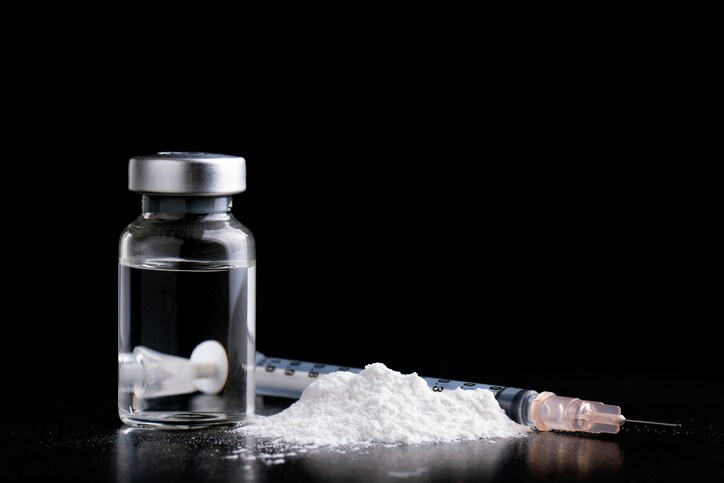
The Food and Drug Administration (FDA) issued a warning on Tuesday to both patients and healthcare providers, highlighting the potential risks associated with the use of compounded ketamine, a type of psychedelic drug. In recent years, there has been a growing interest in the use of ketamine for treating psychiatric illnesses.
However, the FDA has not approved ketamine for the treatment of any psychiatric disorder. Moreover, the use of illicit ketamine is also on the rise.
The FDA stated that despite the increasing interest in compounded ketamine, there is no evidence to suggest that it is safer, more effective, or works faster than medications that are FDA-approved for the treatment of certain psychiatric disorders.
The agency is aware that compounded ketamine products have been marketed for a wide range of psychiatric disorders, but it has not determined that ketamine is safe and effective for such uses.
What Is Ketamine?
Ketamine is an FDA-approved schedule 3 controlled substance used for induction and maintenance of anesthesia via injection. Despite being a generic anesthetic, it has hallucinogenic effects that distort the perception of sight and sound. It also makes a person feel disconnected from their pain and surroundings.
Some doctors consider ketamine a psychedelic drug because it can alter the perception and sense of a person’s environment. However, it works differently from traditional psychedelics.
Most psychedelics overstimulate the pyramidal cells, which are responsible for thinking and voluntary movement.
This leads to extrasensory effects.
Ketamine, on the other hand, inhibits the cells that control pyramidal cells, which releases the pyramidal cells from control. This results in slightly weaker effects than traditional psychedelics.
It is important to note that the FDA has not yet established a safe or effective dosage of ketamine, which is a mixture of both R and S ketamine molecules, for any psychiatric uses. However, some healthcare providers prescribe it for off-label use to treat certain conditions.
Spravato, which only includes the S-ketamine molecules, has been approved as a nasal spray for adults with major depressive disorder who have treatment-resistant depression and suicidal ideation or behavior.
It must be dispensed and administered in medically supervised healthcare settings that are certified in the FDA’s drug safety program.
The FDA warns that compounded ketamine products are not monitored under the drug safety program and may
be less safe.
Health Risks
Recently, the FDA issued a warning regarding the use of oral ketamine compounds outside of a healthcare setting. They cited a case of a patient who experienced hypoventilation after taking such a compound.
The patient’s ketamine blood level was found to be twice the level typically obtained for anesthesia, which caused a drop in heart rate and blood pressure.
The FDA also listed possible psychological side effects, such as dissociation and changes in vital signs. It is important to note that ketamine is typically associated with an increase in blood pressure and heart rate, but patients who have depleted catecholamines may experience a drop in heart rate. Catecholamine depletion is a common side effect of antidepressants.
Furthermore, chronic use of ketamine in high doses can lead to bladder damage, incontinence, and pain with urination.
Ketamine also bears psychological risks.
“It has significant effects on cognition, meaning that you’re no longer thinking clearly at all,” Dr. Gerard Sanacora, a professor of psychiatry at Yale University, said in an interview with Yale.
“It can also dramatically alter perceptions. People can hear things differently, see things differently, feel things differently—this can be really scary to some people and cause them to act differently than they would without the drug in their system.”
The use of hallucinogens is commonly referred to as “tripping”. However, a bad trip can cause fear, confusion, or panic. In addition, ketamine use can lead to amnesia post-trip, while long-term use is associated with memory loss and loss of concentration. Studies have shown that chronic consumption of ketamine can also alter the structure of the brain.
Dr. Sanacora points out that ketamine is not a miracle cure for serious mental illnesses. Ketamine should not be given in isolation.
All studies presented for consideration of FDA approval were conducted with close psychiatric follow-up. It is incredibly naive and uninformed to think that ketamine alone will solve depression. It is a part of a treatment plan, not the entire plan.
Despite its popularity as a recreational drug for many years, ketamine can be addictive.