
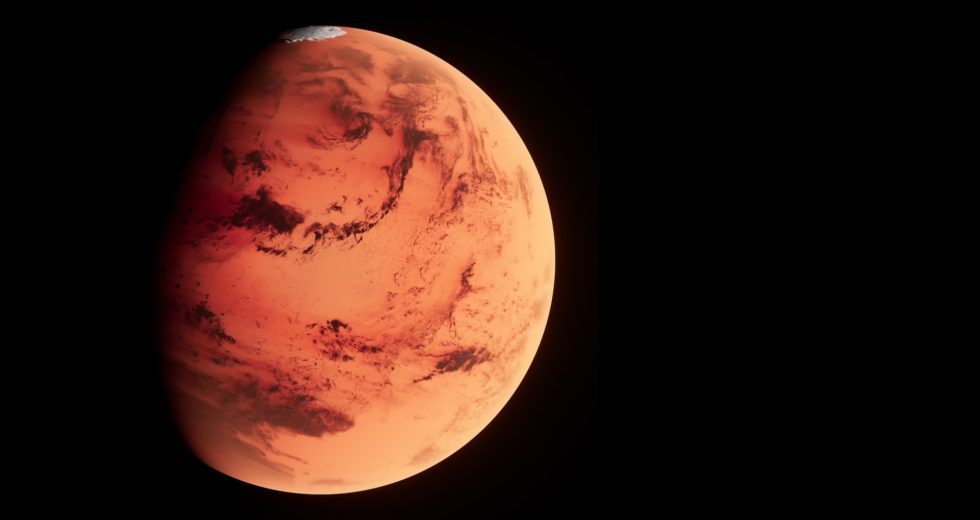
The InSight Lander, also known as the Interior Exploration using Seismic Investigations, Geodesy and Heat Transport, is a spacecraft developed by NASA to study the interior of Mars. It was launched on May 5, 2018, and landed on Mars on November 26, 2018.
The primary objective of the InSight mission is to gather data about the structure and composition of the Martian interior, including its crust, mantle, and core. To do this, the spacecraft is equipped with a suite of scientific instruments, including a seismometer, a heat probe, and a radio science experiment.
After four years spent on the Red Planet, it’s finally the end of the road for NASA’s InSight lander.
NASA retires InSight
The Twitter account of the InSight mission “gave life” to the lander in an emotional tweet. Here’s what the lander “says” to the world:
My power’s really low, so this may be the last image I can send. Don’t worry about me though: my time here has been both productive and serene. If I can keep talking to my mission team, I will – but I’ll be signing off here soon. Thanks for staying with me.
My power’s really low, so this may be the last image I can send. Don’t worry about me though: my time here has been both productive and serene. If I can keep talking to my mission team, I will – but I’ll be signing off here soon. Thanks for staying with me. pic.twitter.com/wkYKww15kQ
— NASA InSight (@NASAInSight) December 19, 2022
The seismometer of InSight, known as the Seismic Experiment for Interior Structure (SEIS), is designed to detect and measure Marsquakes or seismic activity on the planet. By analyzing the frequency and intensity of these quakes, scientists can learn more about the structure and composition of the Martian interior.
It is currently not possible for humans to permanently colonize Mars, as the planet does not have a hospitable environment for humans. The surface of Mars is very cold, with an average temperature of about -80 degrees Fahrenheit (-62 degrees Celsius). The planet also lacks an atmosphere that can support human life and has no protective magnetic field to shield it against solar radiation.
However, humans have sent several spacecraft to Mars to study the planet and its potential for supporting life.