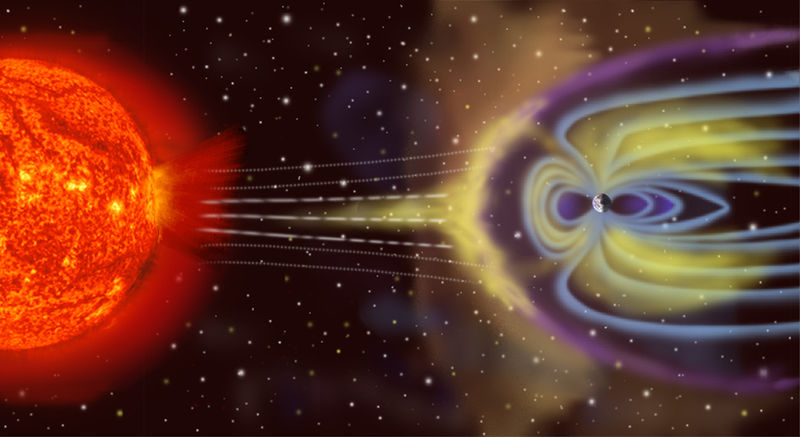
It has been just revealed that the sun’s increased activity will be sparking geomagnetic storms on our planet. Check out more details about this below.
Geomagnetic storms on Earth
NASA has issued a crucial warning regarding an imminent increase in sunspots and the expected release of several coronal mass ejections (CMEs) in the coming days. EarthSky scientists have identified disruptions in Earth’s magnetic field, which represent temporary disturbances in the planet’s magnetic field and have been classified as G1 geomagnetic storms.
These magnetic storms may cause enhanced displays of the captivating northern and southern lights, commonly referred to as aurorae. Therefore, people residing in northern and southern latitudes should be alert and expect these enhanced auroras.
On November 25 at approximately 8:59 UTC or 2:05 IST, a geomagnetic storm was initiated on Earth due to the surge in coronal mass ejections (CMEs) from the Sun. This event is expected to provide residents in the northern United States with the opportunity to observe aurorae. According to EarthSky, there is also a possibility of another storm happening tomorrow.
Aurora alert! A CME – a great burp of material and magnetic fields – arrived at Earth today, which should be causing auroral displays now. By tonight, the auroras might extend to areas like the northern U.S. Read more at https://t.co/6Xd48jM0Nf pic.twitter.com/WqwYFyyvEq
— EarthSky (@earthskyscience) November 25, 2023
There are four categories of solar flares – B, C, M, and X. B-class flares are relatively small and pose no threat to Earth, while C-class flares can have observable effects on the planet. M-class flares are more substantial and have the potential to induce limited radio blackouts.
The most perilous flares are X-class flares, which can lead to planet-wide radio blackouts accompanied by intense radiation emissions.
However, after the initial report, the flares seem to have decreased to low levels. In the past 24 hours, only four C flares have been noted, despite there being 11 active regions on the Sun’s surface. Over the next 24 hours, there is a 99% likelihood of C flares, a 55% likelihood of M flares, and a 10% likelihood of X flares.
“As solar activity has increased in recent days, reports indicated anticipation of additional M-class flares, with scientists speculating the possibility of significant M and X-class flares,” NDTV notes.