
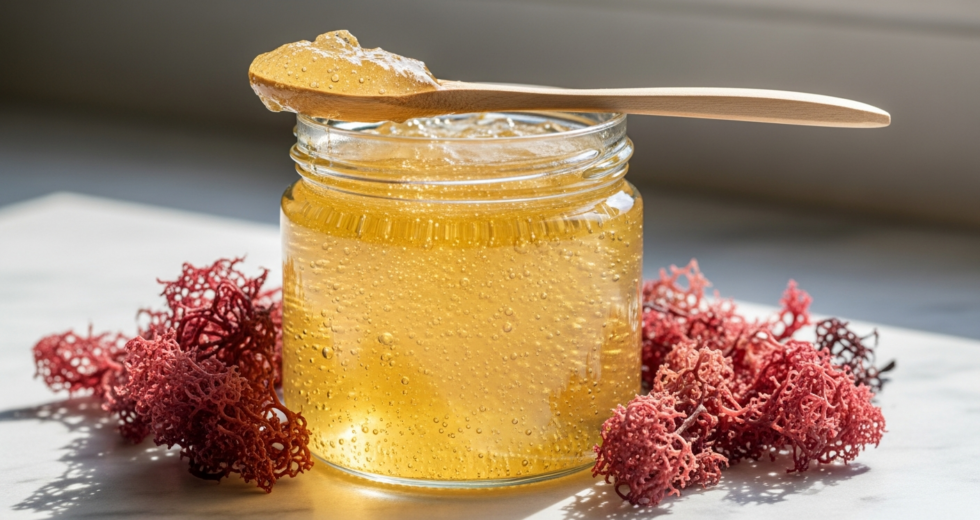
Sea moss gel benefits center on one defensible fact: this red algae is genuinely rich in minerals and soluble fiber that most Western diets lack. A daily serving supplies iodine, potassium, magnesium, iron, and the prebiotic fiber carrageenan — all in one food. The wider claims you see online (gut healing, hormonal balance, immune boosting) have real biological plausibility, but the human clinical data is still thin. Think of sea moss gel as a nutrient-dense food addition, not a cure.
That distinction matters more than most sea moss content admits. If you have a thyroid condition or take medication, the iodine load in daily sea moss is something your doctor should know about.
Here’s what the science actually supports, how to use the gel safely, and how to make it at home.
What Sea Moss Gel Actually Contains
Raw dried sea moss (Chondrus crispus, the Atlantic variety most commonly sold in the US) is roughly 55–80% carbohydrate by dry weight, most of that soluble fiber. It also carries a real mineral profile: iodine concentrations vary widely by harvest location but routinely run high.
The widely repeated “92 minerals” figure is not supported by peer-reviewed compositional analysis. Real lab panels on Chondrus crispus and related species consistently show a meaningful range of minerals, but the number depends heavily on where the algae was grown and how it was processed. Treat that specific claim with skepticism.
What holds up: iodine (often substantial), potassium, calcium, magnesium, phosphorus, and small amounts of B vitamins. That is a legitimate nutritional case without needing inflated numbers.
Sea Moss Gel Benefits: The Evidence Tier by Tier
Thyroid Function (Strongest Case, With a Catch)
Iodine is essential for thyroid hormone synthesis. If your diet is low in iodine, adding a modest amount of sea moss gel may support normal thyroid activity. That’s grounded in basic physiology.
The catch: too much iodine also disrupts thyroid function. For people with Hashimoto’s thyroiditis, Graves’ disease, or existing thyroid nodules, excess iodine can trigger flares or interfere with medication. The upper tolerable intake for iodine in adults is 1,100 mcg per day, and some sea moss products test at several hundred micrograms per serving. Two tablespoons daily could push you close to that ceiling depending on the batch.
If you have any thyroid history, talk to your doctor before making sea moss gel a daily habit. For more context on how iodine interacts with thyroid health, read Iodine Deficiency Can Trigger Cancer, Thyroid Disease.
Gut Health and Digestion (Plausible, Early-Stage)
The soluble fiber in sea moss acts as a prebiotic, meaning it ferments in the colon and feeds beneficial bacteria. Animal studies show positive changes in gut microbiome composition. Human trials are limited, but the fiber mechanism is real and consistent with other prebiotic foods.
Some people report reduced bloating and more regular digestion within a few weeks of use. Whether that’s the carrageenan fiber, improved hydration from the gel texture, or something else is hard to separate. Still, adding a fiber-rich whole food to a low-fiber diet is rarely a bad idea.
Skin and Mucous Membranes (Topical Use)
Sea moss gel has a high mucilage content, which makes it genuinely hydrating when applied topically. It’s shown up in serums and masks for years, and the skin-feel rationale makes sense: the gel coats and temporarily retains moisture. Internal consumption for skin benefit is harder to document directly.
Energy and “Mineral Replenishment” (Anecdotal)
Many users describe a general lift in energy after a few weeks of daily use. The honest interpretation: if your diet was deficient in iron, magnesium, or B vitamins, correcting that deficiency will improve how you feel. Sea moss gel is not a stimulant. Any energy benefit is indirect, through nutrition.
Immune Support (Preliminary)
Some compounds in red algae, including specific polysaccharides, show immune-modulating effects in laboratory settings. This is early-stage research. “Immune support” is a legitimate area of investigation, but it’s not a proven clinical outcome you can count on.
How to Use Sea Moss Gel
The standard recommendation is one to two tablespoons per day, mixed into food or drinks. It dissolves easily into smoothies, oatmeal, soups, or even coffee without changing the flavor much. The texture disappears when blended.
Start with one tablespoon if you’re new to it. Some people experience digestive adjustment — extra gas or loose stools — in the first week, particularly if their current fiber intake is low. That usually settles.
Avoid taking it on an empty stomach until you know how your gut responds. Pairing it with a meal reduces the likelihood of nausea, which a minority of users report.
Do not exceed two tablespoons daily without a specific reason. The iodine concern is real, and more is not better with sea moss. Consistent moderate use is smarter than large doses.
How to Make Sea Moss Gel at Home
Making your own gel gives you control over quality and concentration. The process takes about 24 hours but only 15 minutes of active work.
What you need:
1 oz (28g) dried sea moss, a large bowl, filtered water, a blender, and a glass jar with a lid.
Step 1 — Rinse well. Place the dried sea moss in a bowl and rinse it under cold running water two or three times. You’re removing sea salt, sand, and any debris. The smell at this stage is strong and oceanic; that’s normal.
Step 2 — Soak overnight. Cover the rinsed moss with filtered water by at least two inches. Leave it at room temperature for 12–24 hours. It will expand significantly, turning lighter in color and softer in texture.
Step 3 — Drain and blend. Discard the soak water. Add the rehydrated moss to a blender with half a cup of fresh filtered water. Blend on high for 60–90 seconds until completely smooth. Add water a tablespoon at a time if the blender stalls — you want a pourable consistency.
Step 4 — Jar and refrigerate. Pour the blended gel into a clean glass jar. It will firm up significantly in the fridge within two to three hours. Keeps for up to three weeks refrigerated, or freeze it in ice cube trays for up to three months.
Gold or purple sea moss varieties work the same way. The color difference comes from the algae species and growing conditions, not from a meaningful difference in nutrient content.
Side Effects and Who Should Be Careful
Sea moss gel is safe for most healthy adults at one to two tablespoons daily. The meaningful risk categories are specific.
Thyroid conditions: As detailed above, high iodine intake can worsen both hypothyroidism and hyperthyroidism. If you’ve been told your thyroid needs monitoring, get your doctor’s input first. Read Thyroid Symptoms in Women Doctors Miss for signs worth tracking.
Blood thinners and anticoagulants: Sea moss contains vitamin K, which affects clotting. If you take warfarin or similar medications, don’t add sea moss daily without medical guidance.
Heavy metal exposure: Like all seaweeds, sea moss can accumulate heavy metals from polluted waters. This makes sourcing matter. Look for products that publish third-party lab results for heavy metals, particularly lead and arsenic.
Pregnancy: Iodine requirements increase during pregnancy, but so does the risk of excess. Consult your OB or midwife rather than self-dosing.
Carrageenan sensitivity: A small number of people react poorly to carrageenan with significant digestive inflammation. If you have IBD or known carrageenan sensitivity, sea moss is not the right supplement for you.
For a broader look at how sea moss compares to its marketing claims, see Sea Moss Benefits: What 92 Minerals and Clinical Research Actually Show.
Frequently Asked Questions
How long does it take to see results from sea moss gel?
Most people report noticing digestive changes within one to two weeks of daily use. Broader benefits like improved skin or steadier energy tend to appear after four to six weeks of consistent use. Results vary depending on your baseline diet and which deficiencies (if any) sea moss is helping to address.
Can you take sea moss gel every day?
Yes, one to two tablespoons daily is generally considered safe for healthy adults without thyroid conditions. Daily use makes sense as a long-term dietary addition, not as a short-term treatment. Monitor how you feel and take a break if you notice unusual symptoms.
Does sea moss gel help with weight loss?
There’s no strong clinical evidence that sea moss causes weight loss directly. The soluble fiber may help you feel fuller for longer, which can support calorie control. But it’s not a fat-burning agent, and marketing it as one overstates the evidence considerably.
What does sea moss gel taste like?
Plain sea moss gel has a mild, slightly ocean-like flavor that most people describe as neutral to faintly briny. It blends almost invisibly into smoothies, oatmeal, and sauces. The texture is thick and mucilaginous — similar to aloe vera gel — which is why it works well as a food thickener.
Is store-bought sea moss gel as good as homemade?
It depends on the product. Commercial gels vary widely in concentration, iodine content, and whether any preservatives have been added. Homemade gel gives you full control over sourcing and concentration. If you buy commercial, look for products with third-party testing and a clear country of origin for the raw moss.
Can sea moss gel affect your thyroid if it’s healthy?
In healthy adults with normal thyroid function, moderate sea moss consumption is unlikely to cause problems. The concern is stronger for people with existing thyroid conditions, where iodine sensitivity is already a factor. If you’re unsure about your thyroid status, a simple TSH blood test before starting daily sea moss is a reasonable precaution.