
Pleistocene, also known as the Ice Age, is the geological epoch characterized by low sea levels and colder temperatures and it started almost 2.5 million years ago and ended 11,700 years ago. Its ending coincides with the Paleolithic age used in archaeology. During the Pleistocene era, the evolution of modern human took place.
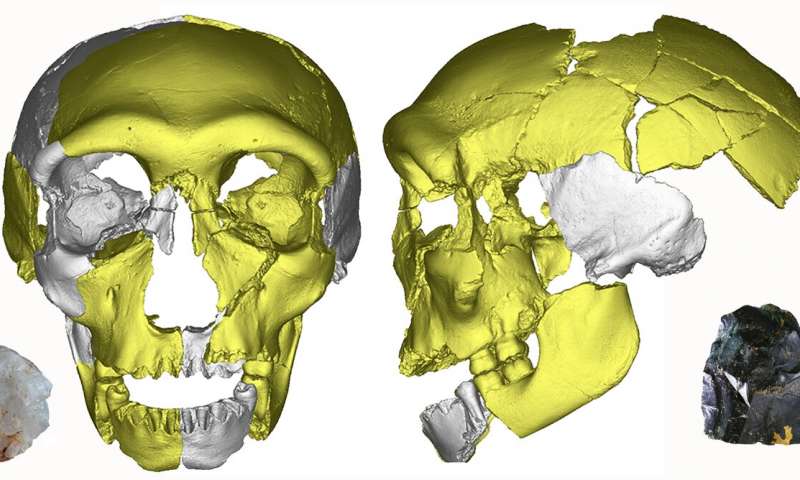
According to a study published in Proceedings of the National Academy of Sciences (PNAS) on April 30, the first ever Middle Pleistocene ancient human skull was found by a team of Chinese researchers led by Liu Wu and Wu Xiujie, in Hualong Cave. The finding revealed differences and resemblances to the early Asian humans. Down below you can see the virtual reconstruction of the discovered skull.
Pleistocene Ancient Human Skull Shed More Light On Human Evolution
The discovery was made in southeastern China, during excavations in Middle Pleistocene cave deposits. The discovered complete skull exhibits features resembling those of other East Asian Middle and Late Pleistocene human remains, while also presenting undeveloped modern human characteristics. The observations indicate a continuity of form during the Middle Pleistocene and the Late Pleistocene.
Studying the pattern of human evolution and the appearance of the Homo Sapiens in East Asia is difficult, due to fossil evidence being fragmentary and dispersed. After a more detailed analysis, the team of scientists determined the skull and associated remains are around 300,000 years old. Some of the most outstanding characteristics of the skull are its low and wide braincase, projecting brow and less prominent midface.
The Middle Pleistocene skull differentiates itself from the other East Asian fossils through its simple teeth, including a smaller or absent third molar. The authors if the research pointed out that, besides adding variation to Middle Pleistocene humans, the discovery also offers proof of regional continuity, as its appearance foreshadows developments in modern humans.