
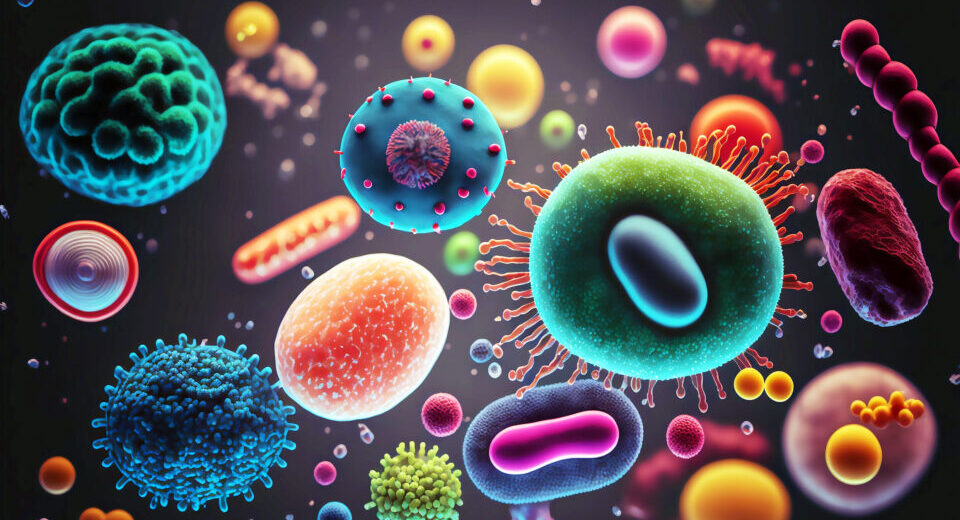
It seems that according to experts, bacteria have memories that they are able to pass on to the next generations. If this is possible, we wonder what us, humans, can do.
Bacteria can pass on memories!
Memories of special moments in our lives hold great significance for humans. However, it is interesting to note that bacteria have been discovered to have memories as well, according to new research conducted by scientists at the University of Texas.
Of course, this doesn’t mean that bacteria can reminisce about their past experiences like humans do. Rather, they are capable of forming memories based on the levels of available cellular iron.
Souvik Bhattacharyya, the lead author of the recent study said:
“Bacteria don’t have brains, but they can gather information from their environment, and if they have encountered that environment frequently, they can store that information and quickly access it later for their benefit.”
A team of scientists, led by the author, conducted a study on E. coli bacteria. Their research revealed that bacteria uses iron levels to “remember” certain behaviors.
Different types of bacteria have varying levels of iron. The study concludes that bacteria with low iron levels tend to swarm together while those with high iron levels prefer to form a sticky biofilm. It is believed that microbial memories may have evolved so that when iron levels are low, bacteria can search for iron within their environment.
“We show […] that a prior experience of swarming is remembered when Escherichia coli encounters a new surface, improving its future swarming efficiency,” the study’s author wrote.
“An iron-based memory might offer the advantage of providing a hub connecting various stress responses such as antibiotic survival and biofilms.”
According to researchers, iron-based ‘memories’ found in bacteria lasted for up to four generations. In natural conditions, these memories were lost by the seventh generation, but artificially altering the iron levels allowed them to last much longer.
The bacteria store information in this way because it dates back to the origins of life on Earth.
“Before there was oxygen in the Earth’s atmosphere, early cellular life was utilizing iron for a lot of cellular processes. Iron is not only critical in the origin of life on Earth, but also in the evolution of life,” added Bhattacharyya.
“It makes sense that cells would utilize it in this way.”
It’s been revealed that more research might help stop bacteria becoming resistant to antibiotics in the future.